
Welcome. We're so glad you're here.
This course is the Good Boy Foundation's invitation to learn — about your dog, about being a great dog parent, and about all the small daily choices that add up to a healthy, happy life together.
 A note before you begin
Want to go even deeper?
A note before you begin
Want to go even deeper?
This course is just the start. Visit our full education library for in-depth resources on everything you could ever want to know about loving and caring for a dog. Always free, always accessible, 24/7.
www.goodboyfoundation.org/educationThe Good Boy Foundation was founded in May 2024 by Winter Fate Morvant, in honor of her soul dog of 16.5 years, Deuce. Our work is dedicated to strengthening the bond between people and their dogs by sharing the essential information every pet parent should know, supporting adoption, rescue, and fostering, and helping families navigate the hardest moments — including cancer diagnostics, treatment, and end-of-life care.
This course exists because of a belief that runs through everything we do: an informed, attentive pet parent is one of the most powerful forces in canine health and happiness. Most heartbreak in dog ownership is preventable. Most fear is preventable. Most returns to shelters are preventable. The path to preventing them is the same — knowledge, paired with somewhere to turn when life gets complicated.
Who this course is for
Anyone who loves a dog, or wants to. We built this with three audiences in mind:
- People preparing to bring home their first foster or adopted dog.
- Families with kids and other pets who want to start out informed.
- Experienced dog parents who'd love a thorough refresh — because there is always more to learn, and our dogs are always becoming.
Wherever you fall on that list, the course is yours - completely free. Take it at your pace. Come back to it. Share it.
What we'll cover
Across fourteen modules, this course walks you through the full landscape of being a dog parent — not just the first weeks, but the whole arc of a life shared with a dog:
- How to reflect honestly before bringing a dog home.
- How to set up the first thirty days for them to thrive.
- How to read what your dog is telling you with their body, not just their bark.
- How to train with positive, force-free, fear-free methods that actually work.
- How to feed, exercise, and enrich your dog as a whole being.
- How to keep up with daily care — dental, grooming, hygiene.
- How to stay ahead of illness with vaccines, prevention, and a monthly wellness check.
- How to recognize emergencies and act quickly when minutes matter.
- How a dog's needs evolve from puppyhood through their senior years.
- How to be the best dog parent you can be — every day, on the easy days and the hard ones.
How to take this course
Take it slowly. Take it with the people who will share the dog's life with you. Read with a notebook nearby. Pause when something hits home.
Your progress will save automatically in this browser, so you can come back to it across days. There is a quick three-question check at the end of each module to help things stick. When you finish all fourteen, you'll unlock a printable First 30 Days plan, a Ready Checklist, and a personalized completion certificate.
Inspired by the love for her soul dog of 16.5 years, Winter founded the Good Boy Foundation so that every pet parent can have the support, information, and community that makes a real difference. This course is one part of that promise. The website holds the rest. You are welcome here.
Listen with the intent to understand, not just respond. — Lessons Learned
Reflecting before you bring a dog home.
There is a kindness in honesty — the kind we offer ourselves before we make a decision that shapes a life. This module is a quiet reflection. No verdicts. No gatekeeping. Just a chance to look at what is true today, and to think clearly about what bringing a dog home will ask of you.
If you are already living with a dog, this module is still worth your time. The questions here aren't only for the moment of choosing — they are useful at every transition: a new puppy, a senior dog, a foster, a household change. Honesty about our circumstances helps our dogs.
Six questions, answered honestly
For each, choose the answer that is actually true today. Score yourself on a 1-to-5 scale where 1 means "not at all" and 5 means "completely true."
Before you commit: the housing & landlord check
If you rent, this step is not optional, and it belongs before the adoption conversation, not after. A casual yes from a landlord can be retracted. A lease clause you missed can become an eviction notice. Some of the most heartbreaking returns we see are the ones where the housing did not actually allow for a dog in the first place. Do this work first, so the dog you bring home stays home.
Before you fall in love with a specific dog, walk through the following:
- Get written approval from your landlord or property management company. A verbal yes is not enough. Email is fine. A signed lease addendum is better.
- Read the pet clauses in your lease carefully, including total pet limits, weight limits, and breed restrictions. Breed lists are often broader than people realize and can include common mixes like lab, shepherd, husky, rottweiler, doberman, or anything labeled "bully-type." Many landlords use insurance-provided lists you will not see until you ask.
- Ask about pet deposits, monthly pet rent, and one-time fees up front, so the dog's true monthly cost is real before you commit.
- Check HOA, condo, or co-op rules separately. Association rules can override a landlord's approval, and a landlord may not realize what the HOA restricts.
- If your landlord agreed verbally in the past but it is not in your lease, ask them to put it in writing now, before you fill out an adoption application.
- If you are planning a move, confirm housing at your next address first. Many returns happen during a move, when a new landlord says no.
Questions to ask your landlord before you adopt
- Is there a weight limit, breed restriction, or pet limit I should know about?
- Is there a one-time pet fee, a refundable pet deposit, or monthly pet rent?
- Will I need a separate pet addendum on my lease? Can you send it to me now?
- If I move within the property or renew under a new lease, will the dog still be approved?
- Are there common-area rules I should know about, such as leash length, off-leash areas, waste stations, or quiet hours?
This is not the right time, and that is okay. Consider fostering through a local rescue while you sort out housing, or wait until you have a stable lease that clearly allows a dog. Bringing a dog home into uncertain housing puts both of you at risk of a return, and a return is one of the most disruptive things a dog can experience.
A few things worth sitting with
Some of what shapes a successful placement is hard to put on a 1-to-5 scale. These aren't tests. They're invitations to think out loud, alone or with the people you love.
Are you choosing this dog, or is someone choosing for you?
If your partner wants a dog and you are not sure, this is the conversation to have now, not later. Not because uncertainty is wrong — it isn't — but because dogs feel ambivalence, and naming it gives everyone a chance to find their footing before a dog walks in.
Is there someone or something in the picture who needs more from you first?
A new baby, a recent move, a senior dog who deserves your full attention in their last chapter. Sometimes a dog is right, and sometimes it's right but not quite yet.
Do you have a clear answer for what you'll do during travel, illness, or a job change?
"We'll figure it out" is the answer that catches new families off guard. A name. A boarding facility. A trusted family member. A back-up plan. The clearer the answer, the smoother the future.
What does your daily rhythm actually look like — not the rhythm you wish for?
Dogs walk into the life that exists. They are remarkable companions, and they thrive when the rhythms of the home meet their basic needs for movement, rest, food, and connection. Take a clear look at your week. If parts of it would need to shift to make room for a dog, name those parts. They are your roadmap, not your barriers.
If you are returning to dog parenthood after losing one, how is your heart?
This is a question only you can answer, and the answer is yours. There is no "right" amount of time to wait. There is no rule about whether grief means now or later. Some people find that opening their home to a new dog is part of how they continue to love. Others need time. Both are valid. Whatever you decide, you don't have to decide alone — the Good Boy Foundation's pet loss and end-of-life resources are here for any season of that journey.
Heavy grief is a direct reflection of how deeply you loved.
Real costs to keep in mind
Adoption fees vary by shelter or rescue and typically cover spay/neuter, initial vaccinations, microchipping, and basic medical care provided during the dog's stay. The recurring costs after they come home are the bigger picture. These ranges are LA-area; your city may differ, but the categories are universal.
Wellness & medical
A regular office visit in LA runs roughly $90–$150, plus vaccines, medications, or treatments. Membership clinics like Modern Animal charge an annual fee instead.
Flea, tick & heartworm prevention
Monthly. Cost scales with the dog's weight — bigger dog, more expensive prevention.
Training
Roughly $50–$150 per hour in LA, depending on the trainer's expertise and what you're working on.
Pet insurance
Rates start around $30/month for a puppy and grow as they age. Worth pricing while they're young and healthy.
Sitters & boarding
In-home sitters $45–$75/day. Boarding facilities $40–$100+/day depending on amenities.
Dog walker
Roughly $20 per half hour in LA, depending on neighborhood and walk length.
If something here gave you pause
That's not a failing. That's wisdom. Read on. Some things change in months. Some things are addressable by the choices you make next — fostering instead of adopting, building support before bringing a dog home, planning for the gaps you've identified. The course will speak to several of these directly. Whatever path you take from here, you'll take it more clearly than you would have.
Bringing them home — the first 30 days.
The first month with your dog sets the tone for everything that follows. This module covers what to set up before they arrive, what to expect once they're home, and the framework that has saved more placements than any other single piece of guidance.

Before they arrive
Every new dog needs a quiet, defined place that is theirs. Not a punishment space — a sanctuary. A crate in a corner, a dog bed in a quieter room, or a sectioned-off area with a baby gate. Soft bed. Water. Maybe a worn t-shirt that smells like you. Set this up before they walk in. Don't try to assemble a crate while a frightened dog watches from the doorway.
The supplies that actually matter on day one:
- Crate or pen sized so the dog can stand, turn, and lie down comfortably — not larger.
- Bed and a soft, washable blanket.
- Two bowls, one food and one water; ceramic or stainless steel preferred.
- Collar with ID tag (your phone number is the must-have) and a properly fitted Y-shaped harness.
- A 6-foot fixed-length leash. Please skip the retractable, especially in the first weeks.
- The same food the rescue or foster has been using, with a transition planned over 7–10 days.
- Small soft training treats.
- Enzymatic cleaner for accidents.
- Baby gates for any rooms or stairs that should be off-limits for now.
- A few quiet toys: chew, plush, puzzle. Skip squeakers in the first week.
The walk-through: dog-proofing your home
Get on the floor. Look at every room from a dog's eye level. Then ask: are electrical cords accessible? Are houseplants reachable (lilies, sago palms, and many others are toxic)? Are medications, vitamins, and human food in reach? Are small swallowable items lying around — children's toys, hair ties, socks? Are trash cans secure? Is laundry off the floor? Are doors that lead outside something you can reliably keep closed? This walk-through takes fifteen minutes and prevents emergency vet visits.
Talking with kids ahead of time
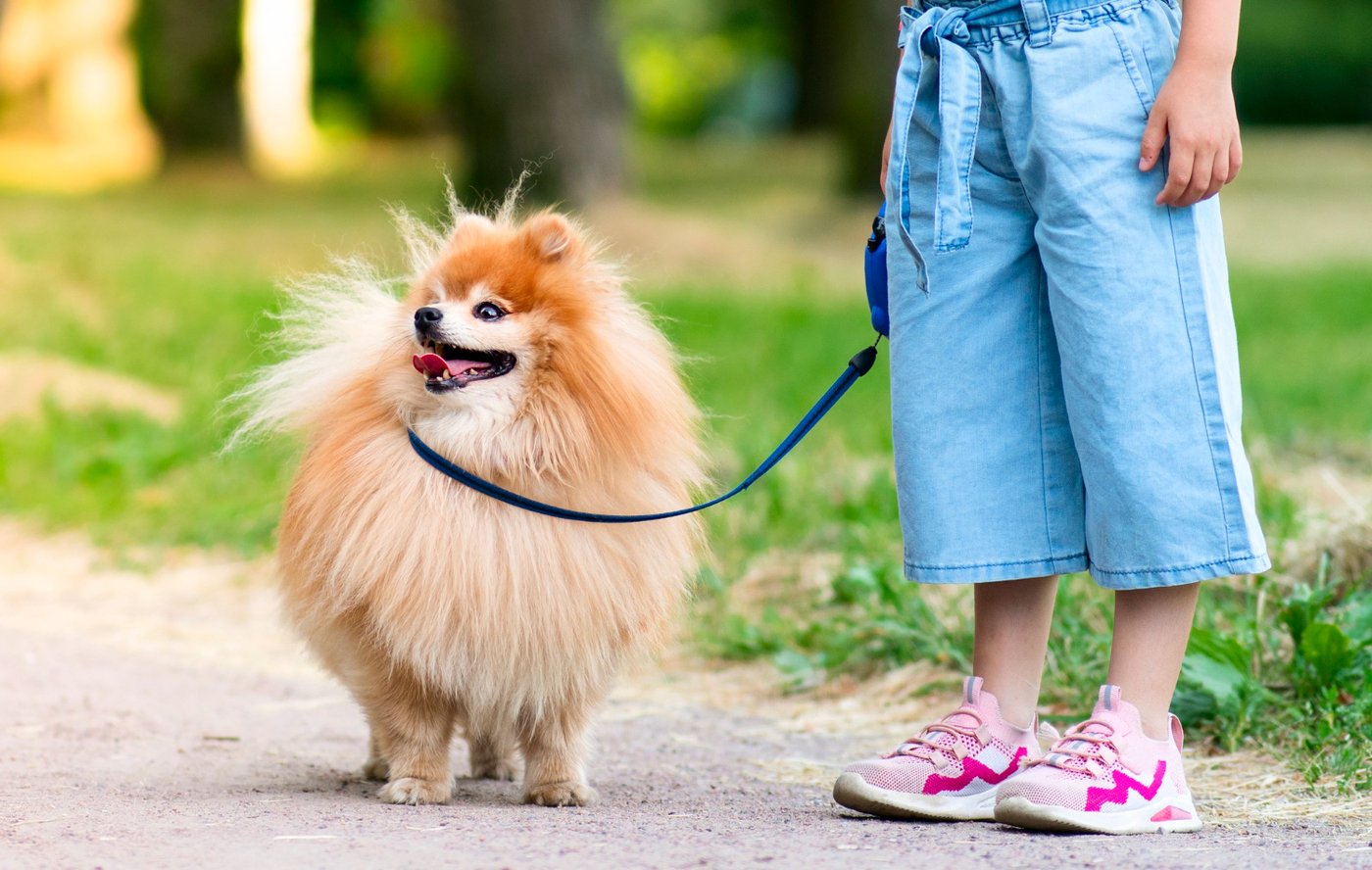
If there are children in your home, the conversation before the dog arrives matters more than almost any other preparation. Children are wonderful with dogs, and they are also, without instruction, the single most common reason dog-and-family situations go sideways. Before the dog walks in, the children should know:
- The dog's safe space is invisible to us. When the dog goes there, no one follows. This is the dog's room. Only the dog decides when to leave it.
- We do not hug the dog. Most dogs don't enjoy being hugged the way humans enjoy hugging. We pet under the chin or on the chest. We do not lean over them.
- We do not chase the dog. Ever. Not even in play. If the dog walks away from us, that is a "no" we honor.
- We do not bother the dog while they eat or have a chew. Period.
- If you see anything that worries you — a growl, a stiff posture, a side-eye — tell an adult right away. You are not in trouble. You are doing the dog a favor.
For very young children, supervised at all times is not a suggestion. It is a rule. There is no such thing as "trustworthy" between toddlers and dogs without an adult in the room.
The first introductions
If you have a resident dog, the introduction matters enormously. Some quick principles:
- Don't introduce them at home first. Meet on neutral ground — a quiet street, a park outside the home — with both dogs on leash, walked parallel rather than face-to-face.
- Walk together for 10 to 15 minutes before any sniffing.
- Enter the home separately on the first day, with the new dog given their own space and the resident dog allowed to roam familiar territory.
- Feed them in separate rooms for the first few weeks.
- Pick up all toys and chews at first. Reintroduce them slowly, one at a time, with supervision.
If you have a cat, the new dog should not have free access to the cat for at least a week. Use baby gates. Let the cat observe the dog from a high, safe place. Some cats and dogs become best friends. Others reach a peaceful coexistence. Both are wins.
The car ride home
This may be the longest car ride of your dog's life so far. Be calm. Be quiet. Crate them in the car if at all possible — it's safest and easier on their nervous system. Don't take them to a pet store on the way home. Don't introduce them to the neighbors. Don't stop at a friend's house. Drive home. Walk them to their safe space. Offer water. Let them be.
The 3-3-3 Rule
If you remember nothing else from this module, remember this: a rescue or newly adopted dog does not become themselves overnight. They become themselves over months. The 3-3-3 rule is the framework that has saved more placements than any other single piece of guidance.
It says that a newly adopted or fostered dog moves through three rough phases:
- The first 3 days — overwhelm and decompression.
- The first 3 weeks — settling in and learning the routine.
- The first 3 months — feeling at home and showing their true self.
These are approximations, not deadlines. Some dogs move faster. Some, especially those from harder backgrounds, take much longer. The numbers are useful because they remind you that what you see in week one is not who your dog is. What you see in week three is not who your dog is. Your dog is becoming, and they are becoming on their own clock.
Days 1 to 3 — overwhelm
Imagine being moved against your will to a foreign country, by people whose language you don't speak, in a house with smells you've never encountered. Now imagine you can't ask any questions. That is roughly what your dog is experiencing.
What you may see: refusing food or eating very little; sleeping a lot; hiding or trying to make themselves small; not playing; following you closely or doing the opposite and avoiding you entirely; not responding to their name; trembling, panting, drooling; stomach upset from stress and food change.
What to do: less of everything. Quieter house. Fewer visitors. No introductions. Same gentle routine, same walk times. Don't push affection — let them come to you. Sit on the floor and read; let them choose proximity. Skip the dog park. Sleep nearby on the first nights if you can.
Weeks 1 to 3 — settling
Around the end of week one, something shifts. Your dog starts to test the edges of their new world. They may begin to play. They may show preferences. They may also test rules — jumping on the couch you said no to, taking food off the counter, pulling harder on the leash. This is not regression. This is your dog beginning to feel safe enough to be a dog.
What to do: begin gentle, reward-based training. Sit. Their name. "Let's go." Five-minute sessions. Maintain the routine. If a behavior surfaces (resource guarding, leash reactivity, fear of strangers), call your rescue or a positive-reinforcement trainer. Schedule the first vet visit if you haven't.
Months 1 to 3 — becoming
By month three, give or take, your dog will start to look like the dog they actually are. The volume goes up on their personality. The shy dog may start initiating play. The high-energy dog may finally settle. The wary dog may finally relax.
What to do: celebrate. Slowly expand their world — new walking routes, gentle exposure to new experiences. Begin or continue training that supports their long-term life: leash skills, recall, settling. Establish the monthly body check (we'll cover this in Module 10).
The safe space, the routine, the "no"
Three more practices to put in place from day one — drawn directly from how the Good Boy Foundation thinks about welcoming a dog:
Protect their safe space. A dog who can always access a place where they will not be disturbed is a dog who rarely feels cornered. Children and guests should understand: when the dog is in their place, they are not to be approached. If your dog self-selects a space (under the bed, behind the couch), honor that too.
Anchor the routine. Dogs are creatures of pattern. Predictable routines are not monotonous to your dog. They are profoundly reassuring. When a dog can anticipate what comes next, they don't have to spend energy being vigilant. That freed-up energy goes toward relaxation, play, and connection.
Listen when they say no. A dog who turns away from a stranger's reaching hand is saying no. A dog who moves out from under a child's hug is saying no. A dog who retreats to their crate when company arrives is saying no. These are not defiance. They are communication. When you honor it, your dog learns that they are heard, and they don't have to escalate to be heard.
Be patient; never rush your dog. Stay off your phone during a walk. Be present with them — you'll be thankful you did one day.
Speaking dog: Body language & communication
Dogs are constantly communicating — we just have to learn how to listen. Your dog is talking to you right now. The question is whether you are listening in their language or expecting them to speak yours.
Most "the dog bit out of nowhere" stories are actually "the dog had been telling us for weeks and we missed every signal." This module is here to make sure you don't miss them.
The ladder of stress
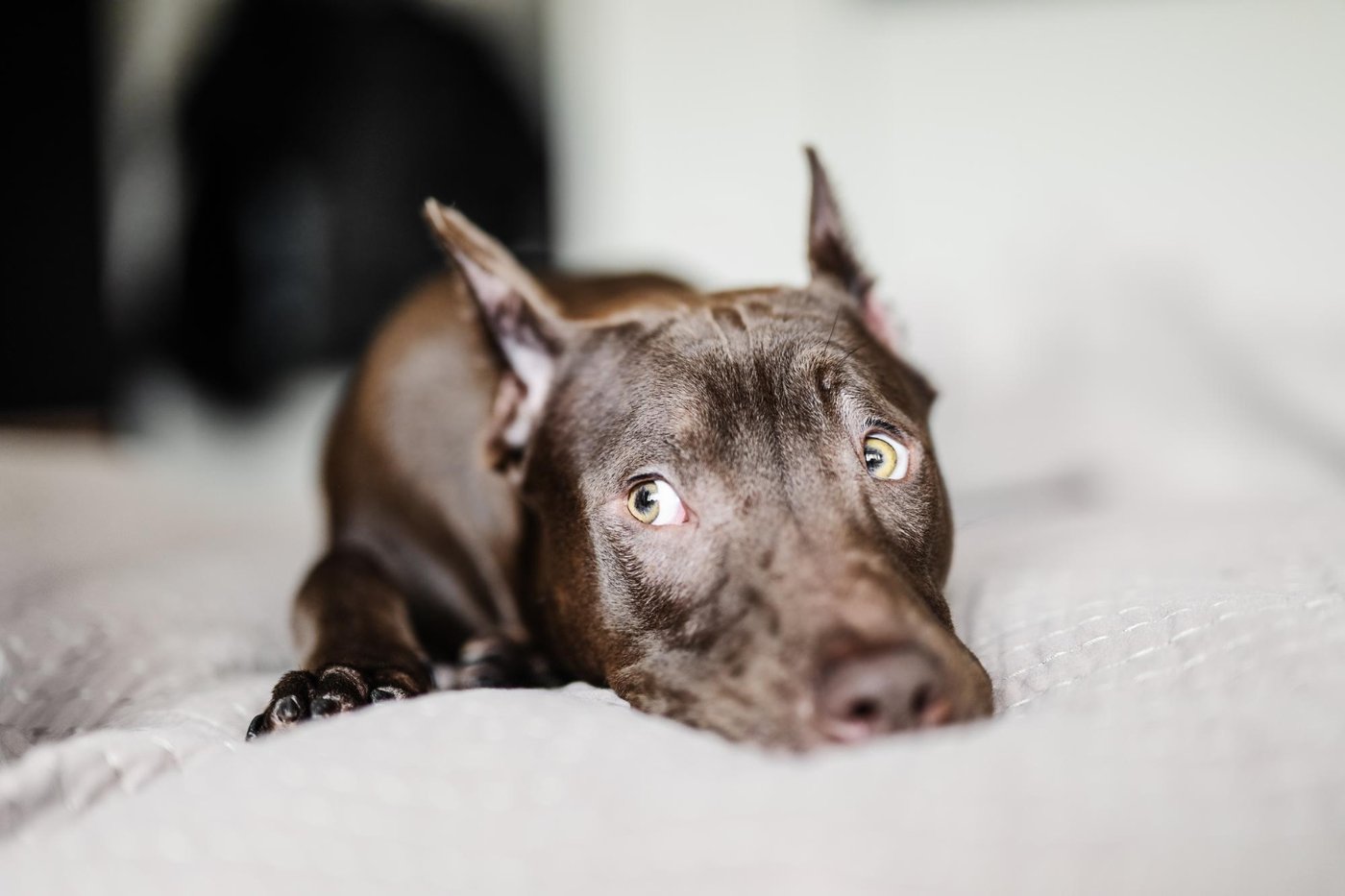
Dogs almost always escalate gradually. Before a growl, before a snap, before a bite, there are usually a dozen quieter signals. Learning to read them is the single most important skill you can develop as a pet parent.
From quiet to loud, the ladder typically looks like this:
- Lip lick / yawn / look away — "I'm not comfortable with this."
- Head turn / body turn — "I'm trying to disengage."
- Whale eye (white of the eye showing) — "I'm tracking something I don't trust."
- Stiff body / closed mouth — "I'm holding it together but only just."
- Ears back / tail tucked / lowered posture — "Please."
- Growl — "I'm telling you with my voice now. Listen."
- Snap (no contact) — "I am out of words."
- Bite — the last resort, almost always preceded by everything above.
A growl is your dog telling you they are uncomfortable. If you punish growling, you are not removing the discomfort. You are removing the warning. Dogs whose growls are punished are the dogs who later "bite out of nowhere." Always thank a growl by giving the dog space.
Calming signals
Dogs use a set of subtle signals to defuse tension — both their own and yours. Watch for these. They are gold:
- Yawning — out of context, this is stress, not tiredness.
- Lip licking — a quick flick of the tongue, especially when no food is involved.
- Sniffing the ground — when there's nothing obvious to sniff, this is often "I need a moment."
- Slow blinking — soft, drowsy-looking blinks. A dog at peace.
- Soft mouth, relaxed body — your dog is at ease.
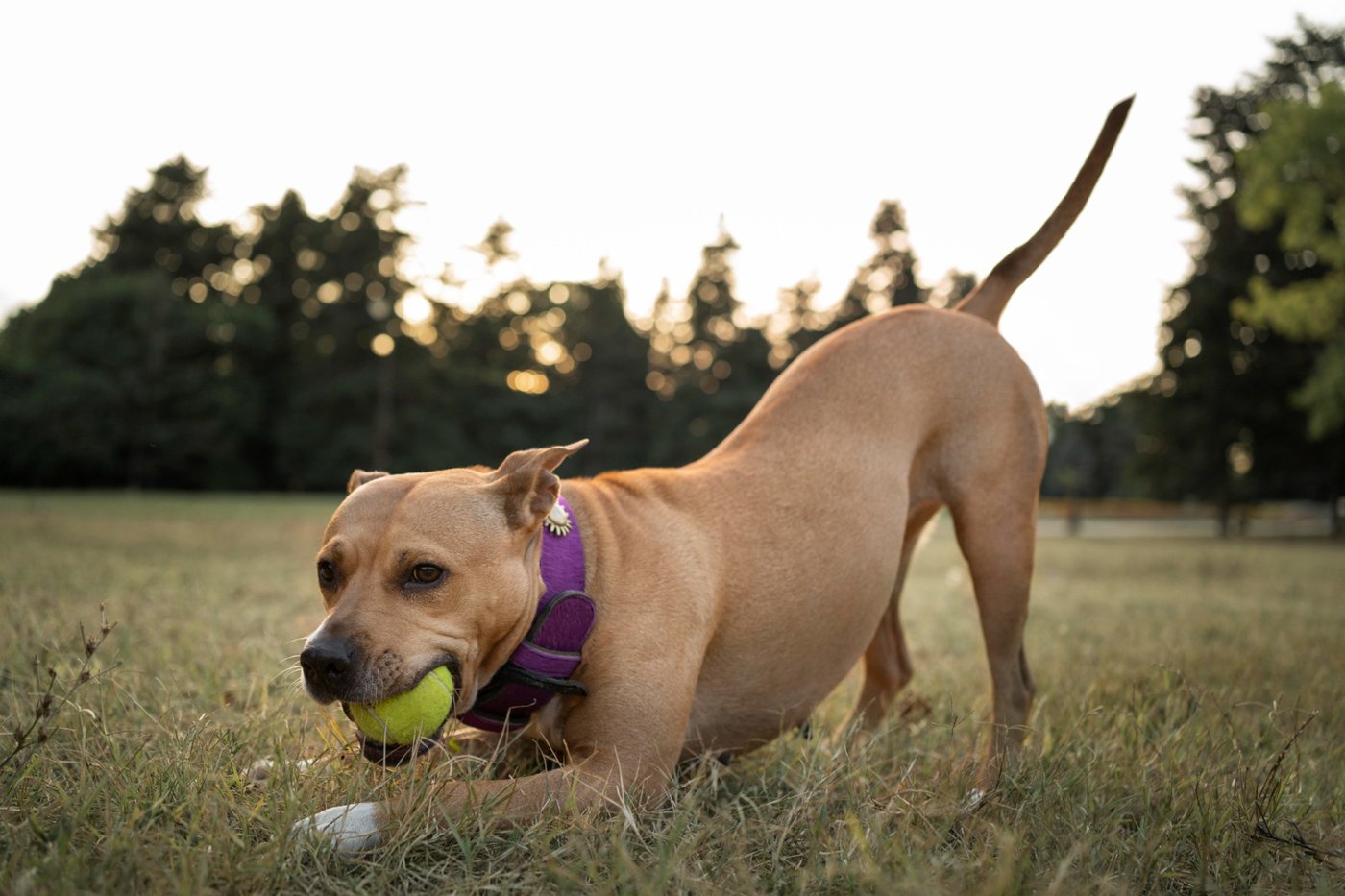
- Play bow — front down, back up — "I'm being playful, this is not a threat."
Reading the whole dog
People often look at the tail to read a dog. The tail alone lies. Read the whole body:
- Eyes — soft and round, or hard and tracking? White showing?
- Mouth — open and loose, or closed and tense?
- Ears — neutral, forward (alert), or flat back (worried)?
- Body posture — fluid and curvy, or stiff and still?
- Tail — fluid loose wag, slow stiff wag, tucked, high and rigid?
- Weight distribution — leaning forward (engaged or threatening), or leaning back (uncertain)?
A wagging tail does not mean a friendly dog. A wag is engagement. The character of the engagement lives in the rest of the body.
The big three you need to recognize today
1. The "I need space" dog
Stiff body. Closed mouth. Eyes hard. Possibly whale eye. Tail high and still, or tucked. Often standing very upright. What to do: increase distance. Don't reach. Don't lean in. Don't make direct eye contact. Move sideways or away.
2. The "I'm scared" dog
Body lowered. Tail tucked. Ears back. Avoiding eye contact. May tremble or pant. Sometimes freezes. What to do: get smaller. Sit, turn sideways, look away. Speak softly. Drop a treat near them, not at them. Let them choose to come to you. Never corner them.
3. The "I'm comfortable" dog
Soft eyes, sometimes squinty. Mouth open and relaxed, sometimes a "smile." Body curvy and fluid. Tail wagging softly, in sync with body. Maybe a play bow. What to do: enjoy this. Pet under the chin or chest. Watch for the moment they're done — most dogs prefer short interactions, not long ones.
The consent test
One of the most useful tools in your toolbox: pet your dog for three to five seconds, then stop and remove your hand. Watch what they do.
- If they nudge your hand or lean in — they want more. Continue.
- If they walk away, look away, or do nothing — they're done. Let them be.
This simple practice teaches everyone in your home that affection is something the dog opts into, not something done to them. Children especially benefit from learning this.
How to approach a dog (yours, or someone else's)
When we see a cute dog, of course we want to boop the snoot and hug it immediately. As amazing as that would be for us, it is not the right way to approach a dog. The dos and don'ts:
Don't
- Use too much eye contact or invade their space.
- Pet a dog without asking their guardian.
- Reach out to "let them smell your hand" — many dogs find this threatening.
- Reach over their head to pet them.
- Use high-pitched, excited voices.
- Stick your face in theirs.
Do
- Ask the guardian's permission to interact.
- Avoid direct eye contact at first.
- Be gentle and calm, especially with your voice.
- Keep a comfortable distance unless the dog engages.
- Allow them to come to you.
- Get down on their level.
- Use an upward palm to give a gentle scratch under the chin or chest.
- Tell them they're perfect and wonderful in every way.
Don't assume that every dog you see on your walk wants to be friends or even approached. Always ask their guardian first. It's okay to tell people no when they go to pet your dog without asking. Always advocate for your dog.
Training foundations.
Good training isn't about control. It's about connection.
If you've ever felt overwhelmed by the sheer amount of conflicting advice out there about how to train a dog, you're not alone. There are endless methods, tools, and opinions, and not all of them are created equal. At Good Boy Foundation, we want to make this simple: we believe in one approach, and one approach only — positive, force-free, fear-free training. The kind that builds trust, strengthens your bond, and actually works. This isn't just our preference. It is what the science says, and what the world's most respected animal behavior experts have been telling us for decades.
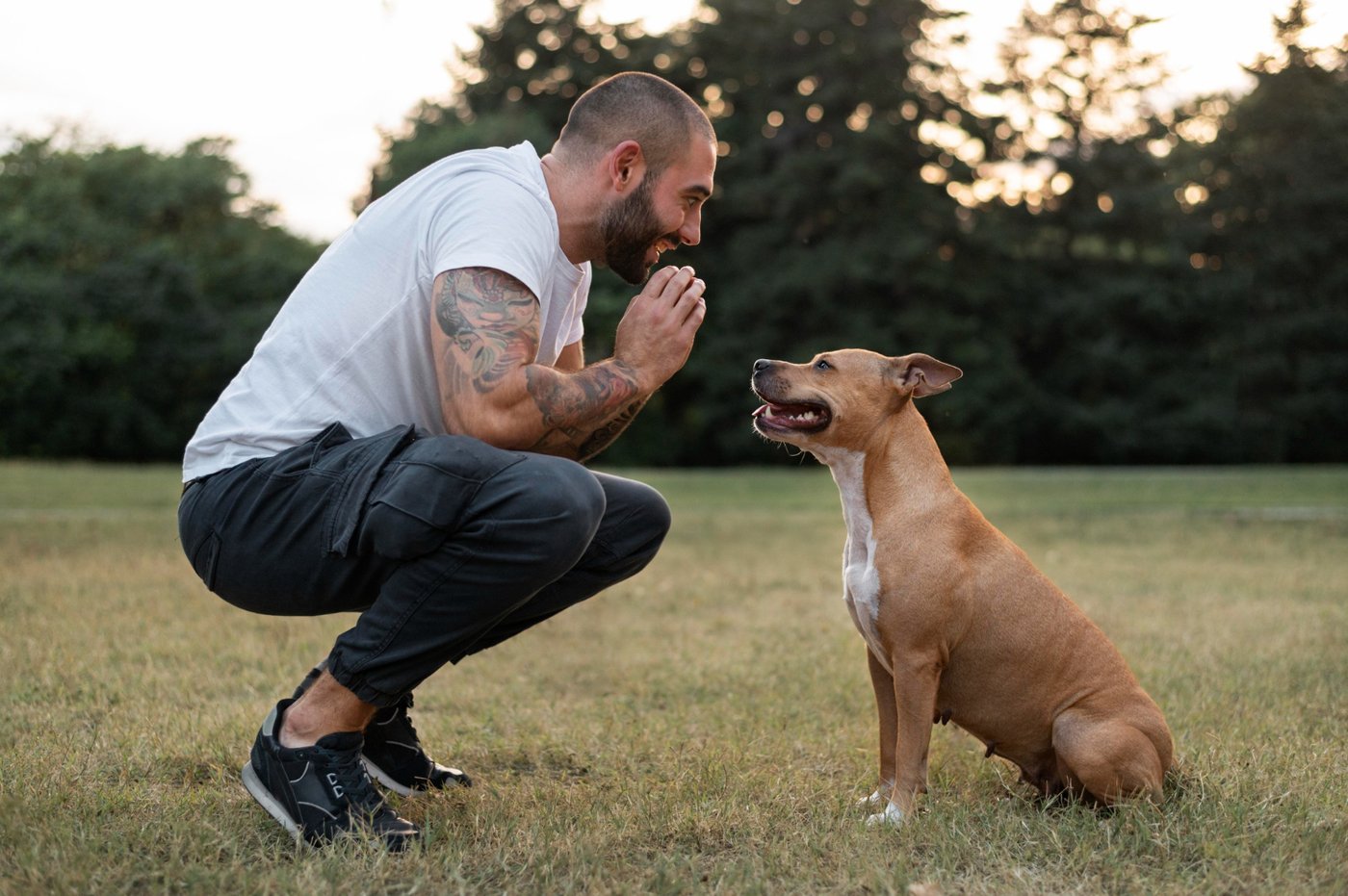
The Three Pillars of a Well-Balanced Dog
Before we talk about training techniques, let's talk about the foundation. No amount of training will be fully effective if your dog's most basic needs aren't being met first. A dog who is under-exercised, poorly nourished, or constantly wound up has very little capacity to learn — not because they're stubborn, but because their body and brain aren't in the right state to absorb anything new.
1. Diet
What your dog eats directly affects how they feel and behave. Poor nutrition can contribute to hyperactivity, irritability, difficulty concentrating, and even anxiety. A species-appropriate, high-quality diet is one of the most powerful and underrated tools in a dog parent's toolkit. If your dog seems impossible to settle or focus, diet is one of the first things worth examining. (We dive deeper in Module 7.)
2. Exercise
A tired dog is a calmer, more receptive dog. Dogs need daily physical exercise appropriate to their breed, age, and health status — not just a quick walk around the block, but real, satisfying movement. A dog who hasn't had adequate exercise before a training session is going to struggle. A dog who has? They're ready to work.
3. The ability to relax
This one is often overlooked. Dogs need to know how to be calm — how to settle, switch off, and rest. If your dog is constantly "on," always seeking stimulation, never able to just lie down and be still, that's worth addressing before anything else. A dog who can't relax can't learn effectively. Teaching your dog how to settle is one of the most valuable skills you can give them.
When these three pillars are in place, training becomes dramatically easier. They are not a shortcut. They are the prerequisite.
Before you train: rule out health issues
Before you write off a behavior as a training problem, rule out a health problem. A dog who suddenly stops responding to cues, becomes irritable, won't settle, or acts "off" may be in pain or unwell. Dogs hide discomfort instinctively, and behavior is often the first thing that changes. If something is suddenly different about your dog, a vet visit is the right first step.
What positive reinforcement training is
Positive reinforcement training means rewarding the behaviors you want to see more of. When your dog does something right — sits when asked, walks nicely on leash, comes when called — they get something good: a treat, praise, play, or whatever motivates them most. That good feeling creates a desire to repeat the behavior. Over time, through consistency and repetition, the behavior becomes reliable.
It sounds simple because it is. And it works — not just for basic commands, but for building an emotionally healthy, confident, well-adjusted dog who actually enjoys learning.
As Victoria Stilwell — one of the world's most celebrated dog trainers and a longtime force-free advocate — puts it, positive training is not just a set of techniques. It is a living philosophy built on mutual trust, respect, and understanding. It investigates the root cause of behavior rather than simply suppressing it, and it treats dogs as thinking, feeling beings who deserve to be taught with kindness.
How dogs actually learn
Three principles that will save you years of frustration:
- Behavior that is rewarded is repeated. If you don't want a behavior, don't reward it — even unintentionally. Dogs learn by what works, and "works" is defined by the dog.
- Timing matters. Reward the behavior within one to two seconds, or your dog won't connect the reward to the action.
- Consistency builds reliability. Dogs need clear, consistent cues from every member of the household. If "off" means "off" with you and "stop jumping" with your partner, your dog hasn't been taught either.
Why we don't use punishment
Some people grew up with training methods that involved choke chains, prong collars, shock collars, alpha rolls, or punishment when a dog did something "wrong." Most people who used these methods did so because they didn't know there was a better way. There is.
The research is overwhelming. Multiple peer-reviewed studies have found that aversive training methods — those that use pain, fear, or intimidation to suppress behavior — cause measurable harm to dogs. Dogs trained with aversive methods show significantly higher levels of cortisol (the stress hormone), display more fear and anxiety behaviors, and are more likely to develop aggression. One study found that dogs from training programs using aversive methods were more "pessimistic" in their outlook, reflecting a state of chronic stress and reduced quality of life.
Aversive methods also don't actually teach your dog what you want them to do. They suppress behavior through fear — which means the moment the fear is removed, the behavior often returns. And a dog who is afraid of being corrected is too anxious to learn well in the first place.
The American Veterinary Society of Animal Behavior (AVSAB) has issued a clear position statement: reward-based training should be the first-line approach for all dog training and behavior modification. Punishment-based tools like prong collars, choke chains, and shock collars should not be used.
At GBF, we stand firmly behind this. There is no behavior problem that requires hurting or frightening your dog to fix.
When to work with a professional trainer
Reach out for professional help when:
- A behavior is escalating despite your best efforts.
- You're seeing fear, reactivity, or aggression — even mild forms.
- You feel overwhelmed, frustrated, or unsure.
- You have a new puppy and want to start strong.
- You want to deepen training beyond the basics.
Look for trainers credentialed by KPA (Karen Pryor Academy), CCPDT (Certified Council for Professional Dog Trainers), or those who follow Fear Free or Pet Professional Guild guidelines. The Good Boy Foundation recommends avoiding anyone who automatically uses or recommends prong, choke, or shock collars, "alpha" or "dominance" theory (never ok), or any method that relies on fear or pain.
Learn a new trick every month. Practice training daily. Consistency is everything — make sure all people in your household are on the same page about what is allowed and what isn't.
Building skills & communication.
Once the foundation is in place, the practical skills come quickly. This module is the toolkit — the basic commands every dog should know, the leash skills that make daily life better, and the deeper communication practices that turn a household into a partnership.
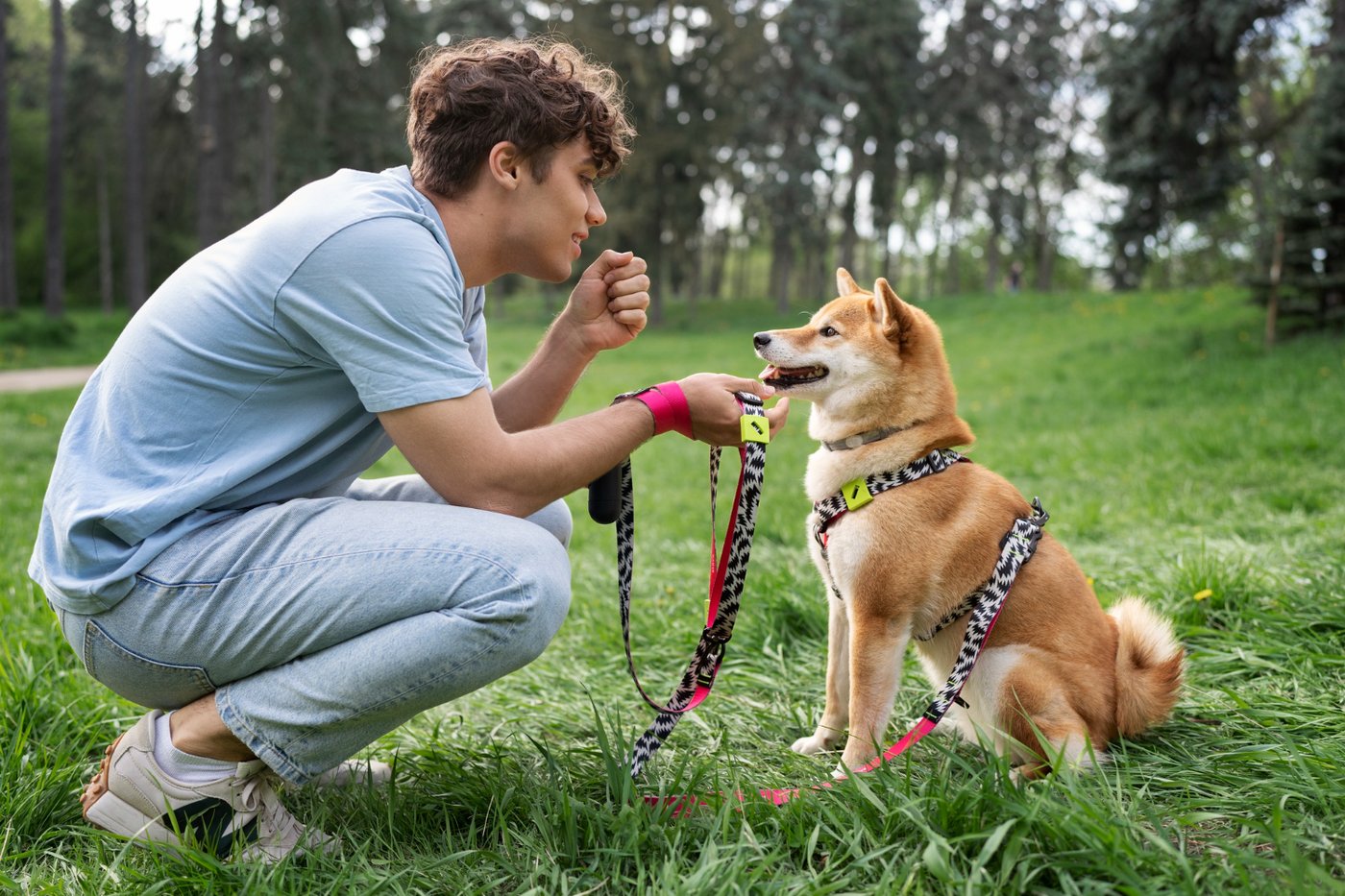
The foundation commands
These are the cues that will serve your dog for the rest of their life. Teach them in short, positive sessions — five minutes at a time, several times a day. End every session on a success, not a struggle.
Sit
The first cue most dogs learn. Hold a treat just above your dog's nose and slowly move it back over their head. As their nose follows the treat up, their bottom usually goes down. The moment they sit, mark it ("yes!") and reward. Add the word "sit" only once they're reliably offering the behavior. Do not push down on their hindquarters — let them figure it out.
Their name
Your dog's name is not a command. It's an attention cue — "look at me." Say their name, and the moment they look, mark and reward. Practice this in the house, on walks, with distractions, with treats getting better the harder the situation. Your dog's name should always predict something good. It should never be used in anger or as a correction. (If you yell their name when they've done something wrong, they will eventually stop responding to it.)
Down
From a sit, move a treat from your dog's nose toward the floor between their paws. As they follow it down, their elbows usually drop. Mark and reward the moment they're lying down.
Stay
Build in tiny increments. Ask for a sit, take one step back, return, mark and reward. Then two steps. Then three. Then add duration. Then add distractions. The most common mistake is asking for too much, too fast — your dog can hold a stay for thirty seconds in your living room and fall apart at the front door because you went straight from one to the other.
Come (recall)
The most important cue your dog will ever learn. Practice it in the house first, where there are no distractions. Say "come!" in your happy voice, and when they come, throw a party — treats, praise, scratches. Your dog should believe that coming to you is the best thing that ever happens. Never call your dog to you for something they won't enjoy (a bath, nail trim, leaving the park). Go get them for those things instead. Recall is a relationship — protect it.
Leave it / drop it
"Leave it" — don't pick that up. "Drop it" — let go of what you have. Both are taught by trading up: your dog learns that giving up one thing reliably leads to something better. These two cues prevent emergency vet visits.
Settle
The most underrated cue in dog training. "Settle" means lie down on a mat or bed and relax. It's not a command for a few seconds — it's a state of being. Reward calm. Reward stillness. Reward a sigh. Build duration over weeks. A dog who can settle is a dog who can join you anywhere.
Leash skills
Loose-leash walking is one of the most commonly requested skills, and one of the slowest to build. The trick is patience and reinforcement of what you want.
- Reward the position you want. Whenever your dog is walking next to you with a slack leash, mark and reward.
- Stop when they pull. The moment the leash goes tight, become a tree. Don't pull back, don't yank — just stop. The walk only continues when the leash is slack.
- Use a Y-shaped harness. Front-clip if your dog pulls hard. Never use a prong, choke, or shock collar.
- Skip the retractable leash. They give the dog inconsistent feedback (sometimes long, sometimes short) and they fail in unpredictable ways.
- Let them sniff. A walk is for them, not for you. The fire hydrant they want to investigate for three minutes is mentally enriching them. Let it.
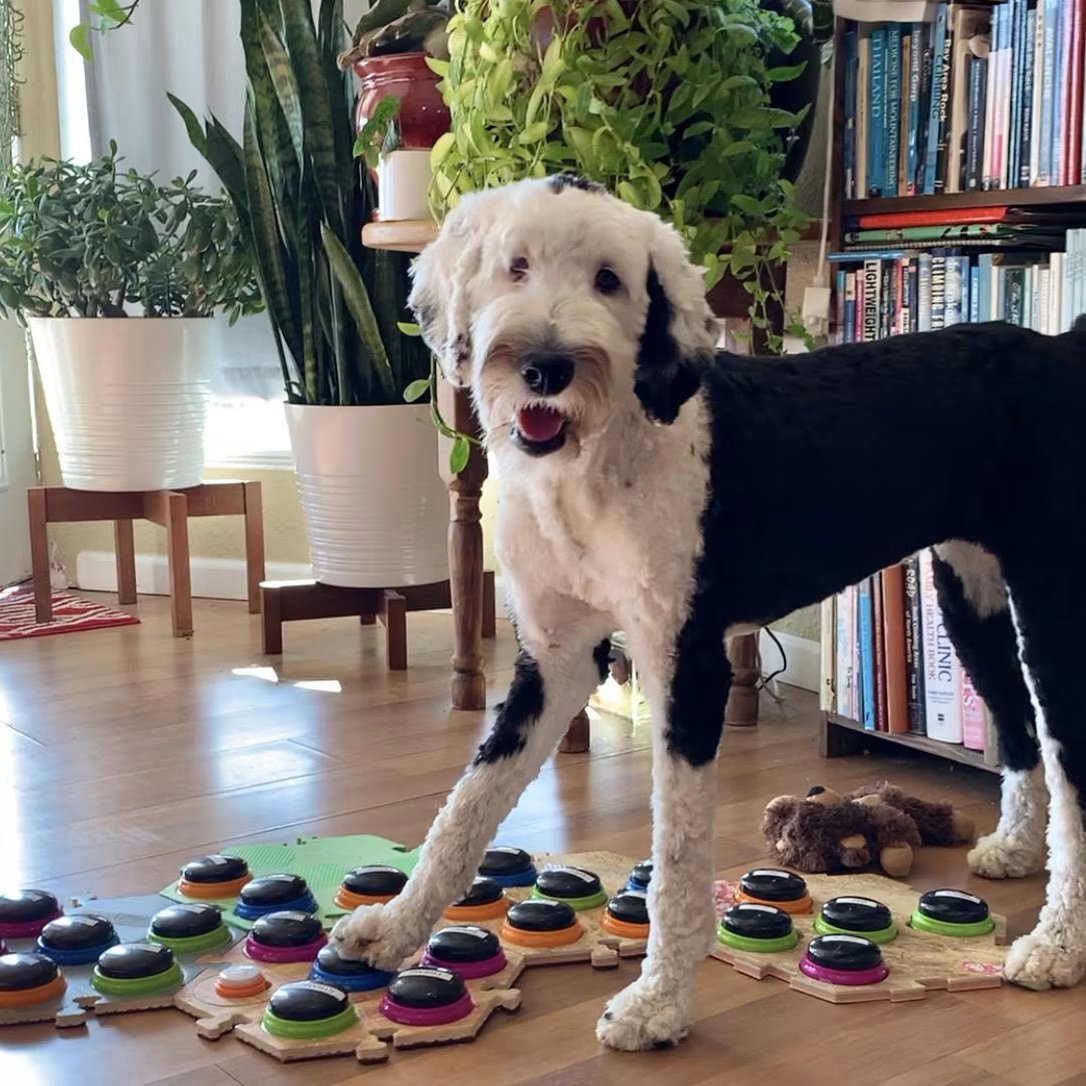
Dog buttons & communication
You may have seen videos of dogs pressing buttons that say "outside," "play," or "love you." Augmentative interspecies communication — using buttons to give dogs a way to express specific concepts — is one of the most exciting frontiers in dog parenting. It's not for every household, but for those who pursue it, the results can be moving.
If you're curious, start small: a single button for a clear, consistent concept like "outside." Press it every time you take your dog out. After dozens or hundreds of repetitions, your dog may begin pressing it themselves. Add buttons gradually, only after the previous one is being used reliably. There are excellent resources from Christina Hunger and Bunny the Sheepadoodle's research project (FluentPet) for those who want to go deeper.
What matters more than buttons: the ongoing practice of treating your dog as a being who has things to say, and listening for them.
Mental enrichment is training too
Training sessions are not the only way your dog learns. Enrichment — any activity that allows your dog to engage their natural behaviors safely and satisfyingly — is fundamental.
- Sniff walks (snifaris) — walks that are about your dog's nose, not about distance. A 15-minute sniff walk is more mentally stimulating and more tiring than a brisk one-mile walk. Let them lead. Let them linger.
- Food puzzles and foraging — instead of feeding from a bowl, try snuffle mats, Kongs, scatter feeding in the grass, or food puzzles. Foraging for food is species-appropriate and lowers arousal levels.
- Chewing — appropriate chew items aren't just for puppies. Adult dogs benefit enormously from regular chewing for stress relief and dental health.
- Novel experiences — new trails, new environments, new smells. Gradual, positive exploration at your dog's pace.
- Training for fun — short, positive sessions aren't just about teaching commands. They give your dog a shared activity with you, mental engagement, and the satisfaction of learning and succeeding.
No matter how tired you are when you get home from work, they've waited all day to be with you. Take time to play with them and walk them. Stay off your phone — be present.
Nutrition, weight & mental wellbeing.
Food is medicine. Movement is medicine. Mental engagement is medicine. The way we feed our dogs and the way we fill their days adds up to one of the highest-impact things we do for their long-term health.
Choosing a food
Look for an AAFCO statement on the label: "formulated to meet the nutritional levels established by the AAFCO Dog Food Nutrient Profiles" or "complete and balanced." A named protein source (chicken, beef, salmon — not "meat meal") should be the first ingredient.
Life stage matters
- Puppies: food formulated for puppies or "all life stages" — different calcium and calorie needs.
- Large-breed puppies: large-breed-specific puppy food — prevents growth that's too fast, which stresses developing joints.
- Adult dogs: AAFCO-compliant adult formula matched to size and activity level.
- Senior dogs: senior formulas or prescription diets depending on health conditions.
- Dogs with health issues: prescription therapeutic diets through your vet (kidney, liver, joint, weight support).
The four main types of food
Dry kibble. Convenient, shelf-stable, affordable. Quality varies enormously between brands. Look for a named protein first, an AAFCO statement, and a formula appropriate for your dog's life stage.
Wet/canned food. 70–80% water, supports hydration, palatable. Calorie-dense — measure portions carefully. Same labeling rules apply.
Fresh cooked (subscription services). The Farmer's Dog, Ollie, Nom Nom, Spot & Tango. Gently cooked, human-grade ingredients, portioned to your dog. More expensive, highly digestible, often well tolerated by sensitive stomachs.
Raw diets. Controversial. There are real risks (bacterial contamination, nutritional imbalance) and proponents who feel strongly about benefits. If you're considering raw, work with a veterinary nutritionist — not a Facebook group.
Portions and feeding schedule
- Feed measured portions on a consistent schedule — typically twice daily for adults.
- Use a measuring cup or kitchen scale, not just a scoop.
- Use feeding guidelines on the bag as a starting point, then adjust based on body condition.
- Treats should be no more than 10% of daily calories.
- Avoid free-feeding — leaving food out all day is a major driver of obesity.
Chocolate, xylitol, grapes, raisins, onions, garlic, macadamia nuts, avocado, alcohol, caffeine, raw bread dough, and many other human foods are dangerous or fatal to dogs. When in doubt, don't share. If you suspect ingestion, call ASPCA Animal Poison Control at (888) 426-4435 immediately.
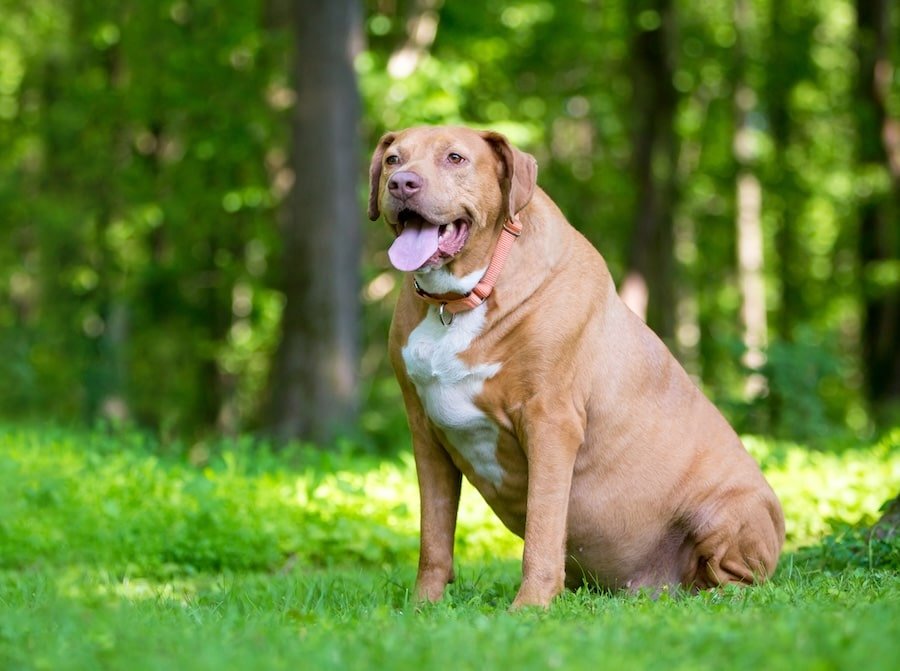
Healthy weight
Approximately 59% of dogs in the United States are overweight or obese, and most of their owners don't realize it. Obesity directly causes or worsens arthritis, heart disease, diabetes, breathing problems, liver disease, and significantly shortens lifespan.
The Body Condition Score (BCS)
Vets assess body condition on a 1–9 scale. The target for most dogs is 4–5 out of 9. The basics:
- You should be able to feel your dog's ribs easily without pressing hard.
- From above, you should see a defined waist behind the ribs.
- From the side, the belly should tuck up toward the hind legs, not hang flat or sag.
If your dog is overweight
- Reduce portions: even a 10–15% reduction makes a meaningful difference over time.
- Cut treats aggressively. Switch to plain carrots or small apple pieces (no seeds).
- Increase movement. Even adding 10 minutes of walking a day matters.
- Ask your vet about prescription weight-management diets.
- Go slow. Safe weight loss is 1–2% of body weight per week. Never crash diet a dog.
Exercise calibrated to your dog
Exercise needs vary enormously by breed, age, and individual temperament. A Border Collie and a Bulldog do not have the same needs. Generally:
- Puppies: short bursts of activity throughout the day. The "5 minutes per month of age, twice a day" guideline is a useful ceiling — too much sustained exercise stresses developing joints.
- Adolescents: need significantly more than they did as young puppies. A tired adolescent is a more cooperative adolescent.
- Adults: daily walks, age-appropriate play, and mental stimulation. Most adult dogs need 30–60+ minutes of movement plus enrichment.
- Seniors: shorter, more frequent, low-impact. Walking, swimming, gentle play. Listen to their body.
One thing every dog needs, regardless of breed: rest. Adult dogs sleep 12–14 hours a day. Some need more. Sleep is when the body repairs.
Mental enrichment
Most behavior problems in well-fed, well-exercised dogs come from under-stimulated brains. Mental work tires a dog out as much as physical exercise — sometimes more. Build it into every day:
- Sniff walks instead of speed walks.
- Snuffle mats and food puzzles instead of bowls.
- Short training sessions in new environments.
- Scent work — hiding treats in the yard or around the house.
- Novel experiences at your dog's pace.
Mental health & emotional wellbeing
Dogs experience anxiety, depression, fear, and grief. They are not "just dogs." Watch for signs that your dog is struggling emotionally:
- Changes in appetite or sleep.
- Withdrawal from family interaction.
- Excessive panting, drooling, pacing without an obvious cause.
- Destructive behavior when alone (separation anxiety).
- Aggression that seems out of character.
- Loss of interest in things they used to love.
What helps: predictability and routine, a safe space, daily exercise and mental work, a calm household, and — when it's beyond what you can address at home — professional help. Veterinary behaviorists exist for exactly this reason. Some dogs benefit from medication, just as humans do, and there is no shame in pursuing it.
Pay attention to your dog's emotional needs. Seek help from your veterinarian if you have any concern. Trust your gut — if it's telling you something is wrong, do something about it.
Daily care: dental, grooming & hygiene.
Most of dog parenthood is small, daily, unglamorous attention. The teeth you brush. The ears you check. The coat you keep up with. None of it makes for a dramatic story. All of it adds up to a long, comfortable life.
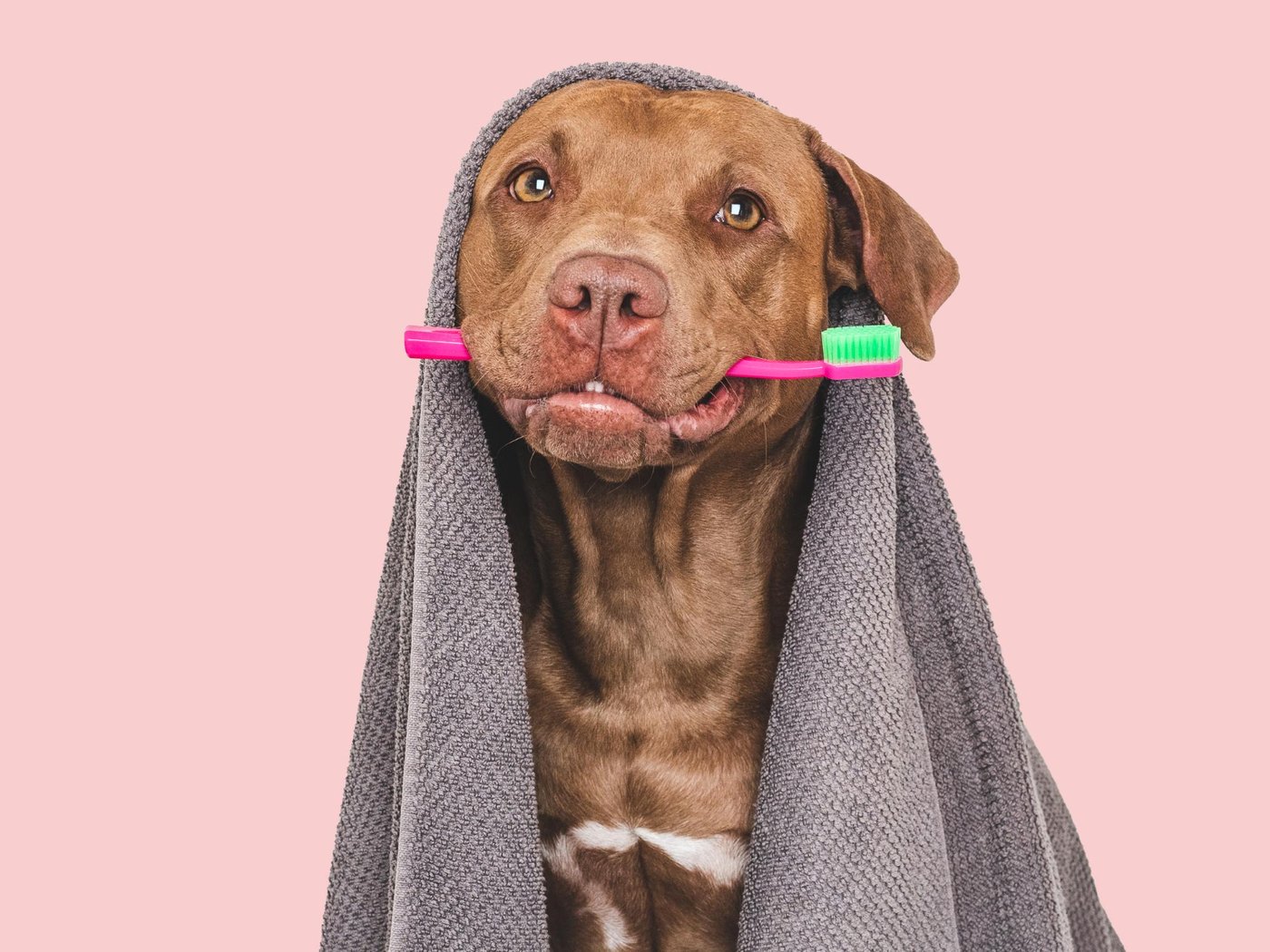
Dental health — the most underrated part of dog care
By the time most dogs are three years old, more than 80% already have some form of periodontal disease — and most of their owners have no idea. Dental disease isn't just a teeth problem. The bacteria that build up under the gumline can enter the bloodstream and affect the heart, kidneys, and liver. It's one of the most preventable health conditions in dogs, and one of the most commonly overlooked.
What's actually happening in your dog's mouth
When your dog eats, bacteria mix with saliva and food particles to form plaque — a soft, sticky film that coats the teeth. If plaque isn't removed, it hardens into tartar within days. Tartar can't be brushed off; it has to be removed by a veterinarian under anesthesia. Over time, tartar buildup leads to gingivitis, then periodontal disease — infection and destruction of the tissue and bone that hold teeth in place. Once it takes hold, it's painful, progressive, and irreversible. Prevention is far easier than treatment.
Signs of dental problems
Dogs are remarkably good at hiding mouth pain. Watch for:
- Bad breath that's new or noticeably worse (not just "dog breath" — truly foul odor).
- Yellow or brown buildup along the gumline.
- Red, swollen, or bleeding gums.
- Dropping food, chewing on one side, or reluctance to eat.
- Pawing at the mouth or face.
- Loose or visibly discolored teeth.
Brush their teeth — every single day
Brushing is the single most effective thing you can do for your dog's mouth. Daily brushing removes plaque before it hardens — research shows it's three times more effective than dental chews or special diets alone. Even brushing a few times a week makes a meaningful difference.
How to start:
- Use a toothbrush designed for dogs (finger brushes work well for beginners) and toothpaste made specifically for dogs. Never use human toothpaste — it contains xylitol and fluoride, which are toxic to dogs.
- Start slow. Let your dog sniff and lick the toothpaste first. Build up to touching the teeth and gums with the brush over several sessions.
- Focus on the outsides of the teeth, especially the back upper molars where tartar builds up fastest.
- Keep sessions short and positive. 30 seconds done daily beats a perfect 2-minute session that never happens.
Dental chews, water additives, and certain diets can support oral health as a supplement to brushing — but look for products with the VOHC Seal (Veterinary Oral Health Council). Only products meeting clinical standards earn it.
Professional cleanings
No matter how diligent you are, your dog will still need professional dental cleanings. The question is just how often. A professional cleaning under general anesthesia is the only way to remove tartar, clean below the gumline, probe for pockets of infection, and take dental X-rays. Most dogs benefit from one every one to three years; small-breed dogs and dogs prone to dental disease may need them more frequently. Don't fear the anesthesia — modern veterinary anesthesia is very safe, and untreated dental disease is far more dangerous than the procedure that prevents it.
Brush their teeth every. single. day. No excuses. It will pay off in spades as they get older. It can save you tons of money down the road as well.
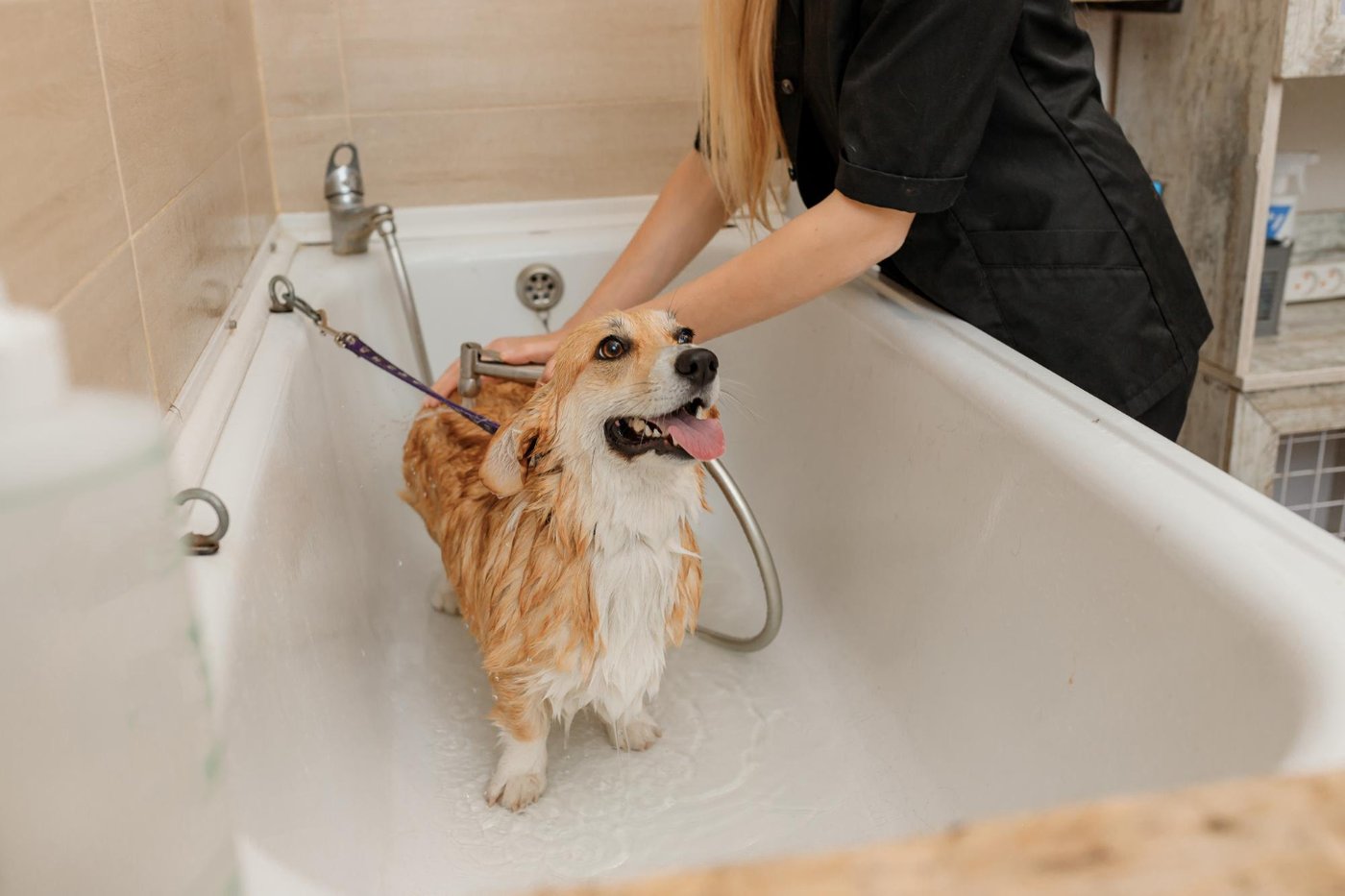
Grooming — coat & skin care
Brushing isn't just cosmetic. It distributes natural oils, removes dead hair, and gives you a chance to check skin condition. Frequency depends on coat type:
- Short, smooth coats (Labradors, Beagles, etc.) — once a week is usually enough.
- Double coats (Huskies, Golden Retrievers, German Shepherds) — multiple times a week, especially during shedding season.
- Long or curly coats (Poodles, Doodles, Shih Tzus) — daily brushing prevents painful matting. Many need professional grooming every 4–8 weeks.
- Wire coats (Terriers) — weekly brushing plus occasional hand-stripping or clipping.
Bathing
Less is more. Most dogs need a bath every 4–8 weeks at most. Over-bathing strips natural oils and can cause skin problems. Use a gentle dog shampoo (never human shampoo — wrong pH). Rinse thoroughly. Dry well, especially in skin folds and ears.
Nails
If you can hear your dog's nails clicking on the floor, they're too long. Long nails change the way your dog stands and walks, and over time can cause joint pain. Trim every 2–4 weeks. If you're nervous, ask your vet or a groomer to demonstrate, and start with very small trims to avoid the quick (the blood vessel inside the nail).
Ears
Check weekly. Healthy ears are pale pink, mostly clean, and don't smell. Signs of trouble: redness, swelling, foul odor, dark or yellow discharge, head shaking, scratching, or rubbing the head on the floor. Allergies are the leading root cause of chronic or recurring ear infections — when the skin inside the ear is inflamed from allergies, bacteria and yeast take over. Use a vet-recommended ear cleaner if your vet recommends one. Never use Q-tips deep in the ear.
The body check builds on all of this
Daily care and the monthly body check (covered in detail in Module 10) work together. Brushing, nail trims, ear checks, and tooth brushing are also opportunities to lay hands on your dog and notice anything new. Make these moments calm, positive, and routine. Your dog's tolerance of grooming is one of the best gifts you can give them — and yourselves — for the next decade.
Preventive care & vaccines.
Vaccines and parasite prevention are two of the simplest, most effective things you can do to protect your dog's health — and your family's. The right schedule and products will depend on your dog's age, where you live, and their lifestyle.
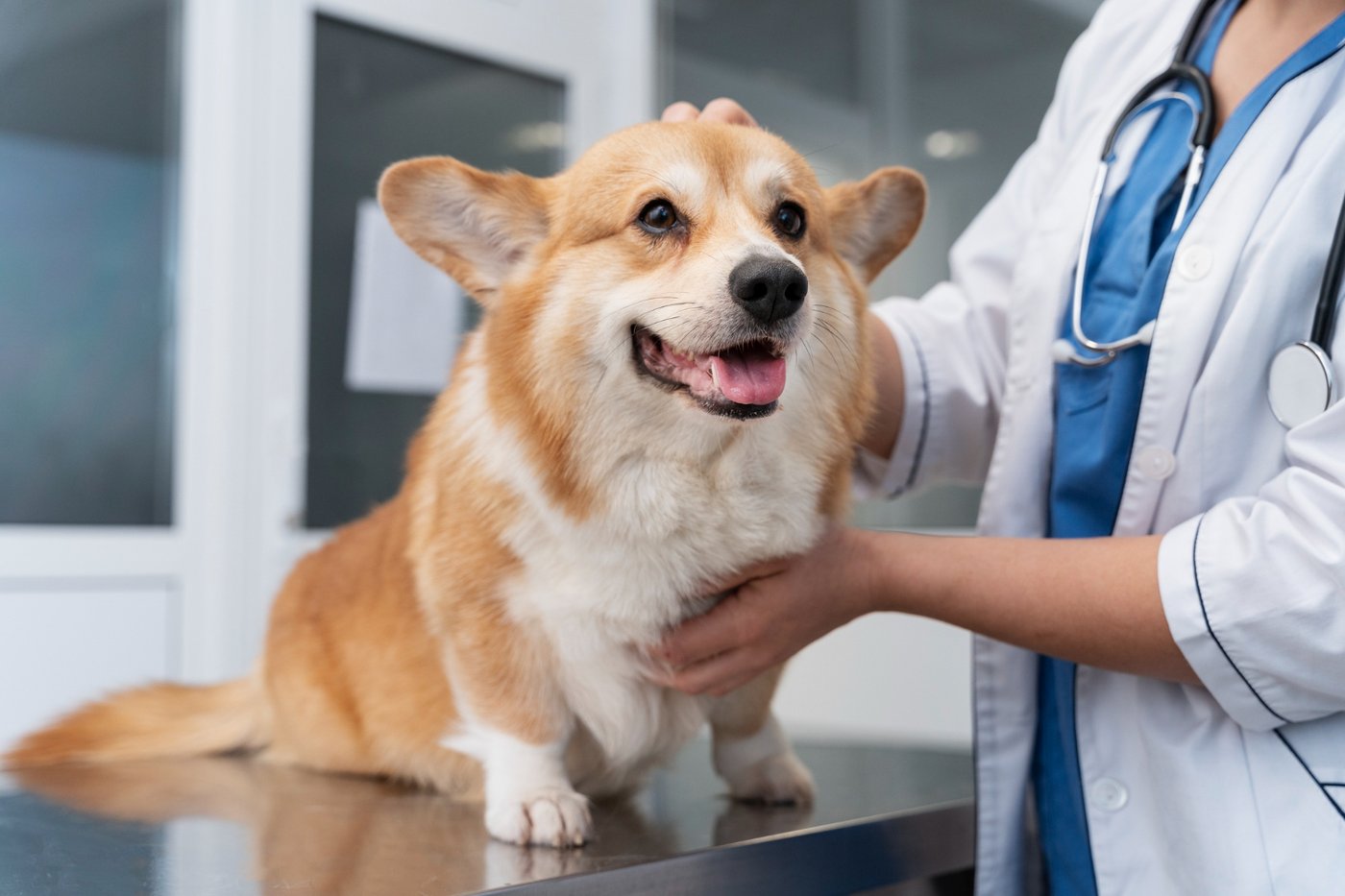
Annual wellness exams
Adult dogs should see a vet at least once a year for a full physical, a discussion of any behavioral or health changes, and age-appropriate preventive care. Senior dogs typically need wellness exams every six months, because changes in older dogs can develop quickly. A wellness exam is your dog's safety net — it's how you catch problems before they're crises.
What to bring to a vet visit
- Current food brand and feeding amount.
- A stool sample if asked.
- Medications and supplements your dog takes.
- A list of any behaviors or symptoms you've noticed — appetite, energy, stool, scratching, coughing, anything off.
- Questions written down, so you don't forget them in the room.
Core vaccines — every dog
Core vaccines protect against diseases that are widespread, severe, and often fatal:
- Distemper — affects respiratory, gastrointestinal, and neurological systems. Up to 80% mortality in puppies.
- Parvovirus — devastating gastrointestinal disease. Survival rate without treatment is under 10%; with aggressive hospitalization, 70–90%.
- Adenovirus / Hepatitis — liver and respiratory disease.
- Parainfluenza — contributes to respiratory infections. Often combined with the above as DA2PP.
- Rabies — universally fatal once symptoms appear, and a public health risk. Required by law in most jurisdictions.
Puppies typically receive a series of these vaccines starting at 6–8 weeks, with boosters every 3–4 weeks until 16+ weeks. Adults receive boosters per your vet's recommendation.
Lifestyle vaccines — based on your dog's life
These are recommended only for dogs whose lifestyle exposes them to specific risks. Talk with your vet:
- Bordetella — kennel cough. Often required for boarding, daycare, grooming.
- Leptospirosis — bacterial disease from contaminated water/soil. Increasingly recommended even for "city" dogs because of urban wildlife.
- Lyme — for dogs in or traveling to tick-heavy areas (Northeast, Mid-Atlantic, Upper Midwest, Pacific Coast).
- Canine influenza — for dogs in social settings (boarding, dog parks, daycare).
Vaccine safety
Vaccines are safe for the vast majority of dogs. Mild reactions (a day of soreness or low energy) are normal. Serious reactions (vomiting, facial swelling, hives, difficulty breathing) are rare but require immediate veterinary care. Tell your vet if your dog has had any prior vaccine reaction — they can adjust the protocol.
Parasite prevention — year-round
Heartworm, fleas, ticks, and intestinal worms can cause serious harm long before you notice them. Prevention is dramatically cheaper, easier, and safer than treatment.
Heartworm
Transmitted by a single mosquito bite. Adult heartworms live in the heart and lungs and can grow up to 12 inches long. Treatment is expensive, hard on the dog, and not always successful. Prevention is a once-monthly oral or topical product, or an injection every 6–12 months. Test annually. Year-round prevention is the standard recommendation in nearly every region of the US.
Fleas and ticks
Fleas cause itching, allergies, and tapeworm infections. Ticks transmit Lyme disease, ehrlichiosis, anaplasmosis, Rocky Mountain spotted fever, and others. Year-round prevention is recommended in most regions. Talk with your vet about which product is right for your dog's lifestyle, weight, and any sensitivities.
Intestinal parasites
Roundworms, hookworms, whipworms, tapeworms, giardia, coccidia. Some are zoonotic (transmissible to humans). Annual fecal testing is the standard. Many heartworm preventives also cover the most common intestinal parasites.
Pet insurance — strongly recommended
Veterinary medicine has advanced enormously in the last two decades. Specialty care, surgery, oncology, cardiology, and emergency treatment are increasingly available — and increasingly expensive. A serious illness or injury can easily run $5,000 to $15,000+ for a single event.
Pet insurance is one of the best investments most pet parents can make. The earlier you enroll (ideally as a puppy or shortly after adoption), the more comprehensive the coverage and the lower the rate. Compare carefully — coverage, exclusions, reimbursement levels, and claim experience vary significantly between providers.
If insurance isn't right for you, the alternative is a dedicated emergency savings fund of at least $1,500–$5,000, kept untouched, for your dog only.
How to give a dog a pill
You will need to know this. A few approaches:
- The cheese (or peanut butter, or pill pocket) wrap. Works for many dogs — wrap the pill in a tasty soft food and offer it like a treat. Watch carefully to make sure they actually swallow.
- The decoy treat trick. Give two plain treats first, then the pill-wrapped third treat, then another plain treat. The dog gets into a rhythm and swallows without inspecting.
- Direct administration. Open the mouth, place the pill at the back of the tongue, close the mouth, gently stroke the throat downward, then offer water or a treat. This is what your vet will demonstrate if all else fails.
- Always confirm with your vet whether the medication can be given with food, on an empty stomach, or with restrictions.
Here's a short, friendly walkthrough — give it a watch:

Knowing your dog's normal & the monthly wellness scan.
Before you can recognize illness, you need to know what healthy looks like for your dog specifically. Every dog has a baseline — and the better you know it, the faster you'll catch a problem.

Baseline vitals & habits to know
- Temperature: normal body temperature is 101–102.5°F.
- Heart rate: 60–140 beats per minute depending on size (smaller dogs are faster).
- Respiratory rate: 15–30 breaths per minute at rest.
- Appetite: how enthusiastically they eat, how much, how fast.
- Energy level: how active they are, how long they play, how quickly they tire.
- Bathroom habits: frequency, volume, what their stool normally looks like.
- Weight: weigh regularly. Even a 1–2 pound change in a small dog is significant.
- Sleep: how much they sleep, where, and how soundly.
- Personality: social, independent, vocal, cuddly. The texture of who they are.
You don't need to memorize numbers. You need to pay attention consistently, so that a change registers.
Signs your dog may be sick
Dogs are remarkably good at hiding discomfort. By the time obvious symptoms appear, a problem has often been brewing for a while. These are the signs that should prompt at minimum a call to your vet:
Changes in appetite or thirst
- Refusing food for more than 24 hours.
- Sudden increase in appetite (can signal hormonal disorders like diabetes or Cushing's disease).
- Dramatically increased water intake alongside increased urination — specifically points to kidney disease, diabetes, or liver problems.
Digestive changes
- Vomiting more than once or twice, or any vomiting with blood.
- Diarrhea lasting more than 48 hours, or any diarrhea with blood.
- Straining to defecate or urinate.
- Noticeable bloating of the abdomen.
Energy and behavior changes
- Lethargy — not wanting to get up, greet you, or do things they normally enjoy.
- Sudden aggression or irritability from a normally gentle dog (often a sign of pain).
- Confusion, disorientation, or staring blankly.
- Hiding or withdrawing from family interaction.
- Pacing, inability to settle, restlessness at night.
Physical signs
- Persistent cough, wheezing, or labored breathing.
- Limping or difficulty rising, especially after rest.
- Excessive scratching, licking, or chewing at one area.
- Lumps, bumps, or new growths anywhere on the body.
- Eyes that are red, cloudy, discharging, or being held shut.
- Ears that smell bad, have discharge, or are being scratched.
- Bad breath that's new or dramatically worse.
- Pale, yellow, or bluish gums (gums should be pink and moist).
- Unexplained weight loss or gain.
Any symptom that persists more than 48 hours, is worsening, involves blood, or is accompanied by lethargy or loss of appetite warrants a vet call. When in doubt, call. That is what your vet is there for.
The monthly wellness scan
This habit can save your dog's life. Five minutes a month, with your dog relaxed, lay your hands on every part of them. Make it a ritual — Sunday on the couch, after a walk, before bed. The goal: notice anything that wasn't there before.
Download the Monthly Wellness Guide A printable companion to walk you through the scan, step by step.The scan, head to tail
- Nose — check for lesions, crust, or excessive drainage. Dryness or wetness alone is not a problem; consistent dryness or unusual wetness over time is worth noting.
- Mouth (if you can do so safely) — check for lesions, swelling, or unusually bad breath. Gums should be pink. Look at the tongue, the underside of the tongue, and the roof of the mouth. Feel along the jawline on both sides for symmetry and any tenderness.
- Eyes — note any abnormal discharge. Compare the two eyes for symmetry. Watch for redness or graying that wasn't there.
- Ears — check for unusual swelling, debris, or foul odor.
- Body — from tail to nose, run your hands against the direction the fur grows. Feel for lumps, bumps, flakiness, or sensitivity. Note any discoloration of the skin (especially red or dark spots) or sores.
- Toes — check between them, top and bottom, for redness, swelling, or irritation.
- Spine — gently run two fingers along either side of the spine, noting any swelling or tenderness.
- Lymph nodes — feel under the jaw, in front of the shoulders, and behind the knees. Healthy lymph nodes are small and difficult to find.
If you find something
Note its size, shape, texture, location, mobility, whether your dog reacts when you touch it, and whether it changes over time. Take a photo. Write the date. Bring this to the vet. Anything larger than a pea (about 1 cm), anything painful, anything growing, anything bleeding, or anything that doesn't heal — call the vet.
Download the Dog Body Map A printable diagram for charting where you found something and tracking change over time.I did this body scan on Deuce weekly, although monthly is enough. It helped me prevent several small things from turning into bigger issues — and most importantly, it helped me catch a lump that turned out to be cancer. His veterinarian at the time missed it at his bi-annual exam just a week prior. I brought him back in for testing and his veterinarian said "no need, it's a lipoma." I knew, in my gut, that it was more than that, so I saw three more vets — all of whom agreed with the original — until Dr. Storm at Modern Animal performed a fine needle aspiration. It was a soft tissue sarcoma, and Deuce had surgery two days later. The surgeon was able to get clean margins and he didn't need follow-up treatment, which is rare — because I caught it early. Three lessons I want every pet parent to take from this: be proactive with your dog's healthcare. Be your dog's best advocate, especially when your gut is telling you something. And always, always do diagnostic work like an FNA on a lump or bump.
Questions worth asking at every vet visit
- Is my dog at a healthy weight? What is their BCS?
- Are there any changes in their teeth or gums I should know about?
- How does their bloodwork look compared to last year?
- Is there anything you're seeing that I should monitor at home?
- What's age-appropriate preventive care for them right now?
- If I notice X behavior, when should I call you?
Emergencies — recognize and respond.
Most days with your dog are normal days. The handful that aren't are the ones you'll be glad you read this module for. Knowing what an emergency looks like, and what to do in the first minutes, can be the difference between a story you tell and a story you grieve.
- Your regular vet (with after-hours instructions noted).
- Your nearest 24-hour emergency vet clinic — find one before you ever need it.
- ASPCA Animal Poison Control: (888) 426-4435 (a $95 consultation fee may apply, and it is worth it).
- Pet Poison Helpline: (855) 764-7661 (a fee may apply).
When to go now — true emergencies
Don't wait until morning. Don't try to manage these at home. Call ahead so the clinic can prepare, and go:
- Pale, white, blue, or grey gums.
- Bleeding heavily that won't stop.
- Obvious extreme pain — crying, unable to move, shaking.
- Sudden paralysis or loss of use of limbs.
- A severe allergic reaction — facial swelling, hives, vomiting after a bite or sting.
- Suspected toxin ingestion.
- Heatstroke signs — collapse, glazed eyes, excessive drooling after being in heat.
- Seizures, especially repeated or lasting more than a few minutes.
- A swollen, hard, distended belly with restlessness — possible bloat.
- Choking, sustained difficulty breathing.
- Hit by car, fall from height, or major injury, even if your dog seems okay.
- Eye injury or sudden vision loss.
- Inability to urinate or defecate, especially if straining.
Bloat (Gastric Dilatation-Volvulus / GDV)
Bloat is one of the fastest-moving, most deadly emergencies a dog can face. It can kill within hours. Bloat happens when the stomach fills with gas and expands dramatically. In the most dangerous form (GDV), the stomach then twists on itself, cutting off blood flow to the stomach and spleen. Toxins build, tissues die, the dog goes into shock.
Signs of bloat
- Swollen, hard, or visibly distended abdomen.
- Retching or gagging repeatedly without bringing anything up.
- Extreme restlessness — pacing, unable to lie down or get comfortable.
- Hunched posture or arched back.
- Excessive drooling.
- Pale gums.
- Rapid, shallow breathing.
- Weakness or collapse.
What to do: go immediately. Call ahead. Keep your dog calm and still. Do not offer food or water. Do not try to relieve the pressure yourself.
High-risk breeds: Great Danes, German Shepherds, Standard Poodles, Weimaraners, Doberman Pinschers, Labrador Retrievers, Saint Bernards, Basset Hounds. If your dog is high-risk, ask your vet about prophylactic gastropexy.
Prevention
- Feed two or three smaller meals per day, not one large one.
- Use a slow-feeder bowl.
- Avoid vigorous exercise immediately before or after meals.
- Do not elevate food bowls (research shows this increases risk, not decreases it).
Heatstroke
Heatstroke can kill a dog in minutes. Brachycephalic breeds (Bulldogs, Pugs, French Bulldogs, Boxers), thick-coated breeds, seniors, puppies, and overweight dogs are at higher risk. Never leave a dog in a parked car. Even mild outside temperatures can become fatal inside a car within minutes.
Signs of heatstroke
- Heavy, frantic panting.
- Bright red or very pale/grey gums.
- Vomiting or diarrhea (may be bloody).
- Glazed, unfocused eyes.
- Stumbling, weakness, or collapse.
- Seizures or loss of consciousness.
What to do — act immediately:
- Move your dog out of the heat into shade or air conditioning.
- Begin cooling with room-temperature water — wet towels on neck, armpits, groin; wet the paw pads. Do not use ice or ice water — it constricts blood vessels and slows cooling.
- Offer small amounts of cool water to drink if conscious.
- Get to a vet immediately, even if your dog seems to recover. Internal damage continues after the external signs improve.
Poisoning
The most common toxins for dogs:
- Chocolate (darker = more dangerous).
- Xylitol (in sugar-free gum, candy, peanut butter, baked goods, some toothpastes — devastating, even fatal).
- Grapes and raisins (can cause kidney failure even in small amounts).
- Onions and garlic.
- Macadamia nuts.
- Alcohol and caffeine.
- Human medications — NSAIDs, antidepressants, blood pressure medications, ADHD meds.
- Marijuana and edibles — increasingly common, sometimes fatal.
- Antifreeze (sweet-tasting and rapidly fatal).
- Rodenticides.
- Many houseplants — lilies, sago palm, oleander, azalea, others.
What to do:
- Call ASPCA Animal Poison Control immediately: (888) 426-4435. Have product name, amount eaten, and your dog's weight ready.
- Follow their instructions — they will tell you whether to induce vomiting or go to the ER.
- Do not induce vomiting unless they tell you to. Some toxins do more damage on the way back up.
- If you can, bring the packaging or a sample of what was ingested with you to the vet.
Other critical scenarios — quick reference
Severe allergic reaction
Facial swelling, hives across the body, vomiting, difficulty breathing — go to the ER. Anaphylaxis can be fatal. Mild reactions to bee stings (one swollen paw) can often be observed, but if there's any doubt, go.
Seizures
Stay calm. Do not put your hand near their mouth. Move objects out of their way. Time the seizure. A single brief seizure (under 2 minutes) followed by full recovery is concerning but not always emergent — call your vet. A seizure lasting more than 5 minutes, or back-to-back seizures, is an emergency. Go.
Choking
If your dog is coughing forcefully, let them keep coughing — that's the most effective way to clear the airway. If they cannot make sound and are panicking, look in the mouth and remove the object only if you can clearly see and grasp it. Otherwise, get to the vet immediately.
Trauma or injury
Even if your dog seems okay after being hit by a car or falling from height, internal injuries can be present. Go to the vet for evaluation.
Build a first aid kit
Keep one at home and one in the car. The basics:
- Gauze pads, gauze rolls, vet wrap (self-adhering).
- Adhesive medical tape.
- Blunt-tip scissors.
- Tweezers.
- Hydrogen peroxide 3% (only use to induce vomiting if poison control directs you to).
- Saline solution for flushing wounds or eyes.
- Digital thermometer (rectal use for dogs).
- Towels and a clean blanket.
- Muzzle (even gentle dogs may bite when in severe pain).
- A copy of your dog's medical records and a current photo.
- Phone numbers for vet, ER, and poison control.
Emergency preparedness
If a natural disaster, evacuation, or emergency happens, your dog is part of your evacuation plan. Have crates, leashes, food and water for at least three days, medical records, and a recent photo packed and ready. Microchip your dog and keep the registration current. Know which hotels and shelters in your area accept pets. The lives lost in Hurricane Katrina and similar events have shaped policy — the PETS Act now requires emergency preparedness officials to plan for animals — but planning still falls on you.
Download the Emergency Preparedness Checklist The full list of what to have ready before disaster strikes — for your dog, and for your family.If your dog gets lost.
Losing your dog is one of the most frightening experiences a pet parent can face. The uncertainty, the helplessness, the panic — they are all real, and we will not pretend otherwise. But there are concrete steps you can take that meaningfully increase the chance of bringing them home, and the most important thing in those first hours is acting fast.
Before anything else, call the rescue or foster organization. They have resources you don't — established networks of volunteers, transport contacts, microchip registries, social media reach across multiple states, and people who have done this before. They want your dog found as much as you do, and they often know exactly what to do next. Make this your very first call.
Contact local animal shelters
Upon realizing your dog is missing, take immediate action by filing a lost pet report with your local animal shelters, rescues, and animal control agencies. Persistently follow up until your beloved pet is safely found. If feasible, personally visit the shelters and continue to make inquiries until your dog is reunited with you.
It's essential not to hesitate in following up. Animal shelters can be busy environments, and staff may not always be aware of every animal in their care. Your persistence could be the key to finding your pet again. Reach out to local veterinary clinics, pet shops, and groomers as well — someone may have found your pet and brought them to a nearby establishment. Don't forget to leave posters or flyers with them to aid in the search effort.
Create effective posters
You've probably noticed missing pet posters in your neighborhood, but not all are equally effective. The best posters for a lost dog:
- Are brightly colored.
- Include a brief description of your dog.
- Include your contact information.
- Have a recent, clear, color photo of your dog.
- Include the offer of a reward (optional).
Ensuring you have up-to-date photos is crucial — even minor changes like a new haircut can significantly alter your dog's appearance. Print your posters in two sizes:
- Large posters for hanging around your neighborhood (11x17" or larger).
- Smaller flyers to distribute directly to neighbors (8.5x11").
Consider placing an ad in your local newspaper's classified section to reach a wider audience and increase the chances of finding your missing pet.
Canvas the neighborhood
Take proactive steps by going door-to-door in the vicinity where your dog was last spotted, distributing the smaller flyer-size versions of your poster. Encourage neighbors to inspect their premises, including garages and sheds, where a frightened dog might seek refuge. Engage in conversations with everyone you encounter, including postal and delivery personnel.
Post flyers on telephone poles and anywhere you can. To maximize outreach, conduct door-to-door visits in the evening when residents are likely to be home from work. Inquire with local establishments about leaving posters or flyers on their bulletin boards or at their registers — coffee shops, restaurants, and other publicly accessible businesses.
Spread the word online
Harness the power of social media strategically in your quest to find your lost pet. Share digital versions of your poster on popular platforms such as Facebook, Nextdoor, Craigslist (under both "pets" and "lost & found" sections), and any other relevant local websites. When posting on Facebook, ensure your post is set to "public" to maximize visibility beyond your immediate network.
For added impact, consider sharing a video of your missing dog. Dog videos tend to capture attention on social media and can provide more detailed information than a still photo.
Actions you can take when you spot your dog
Don't chase them
If you catch sight of your dog in the open, your initial reaction might be to chase after them. Don't. Lost-pet recovery experts emphasize this critical point: avoid running towards, lunging for, or chasing your dog. Despite your eagerness to reunite, a frightened stray may flee from anyone, regardless of familiarity. Pursuing them often results in them darting away — and there's a heightened risk near roads, where a frightened dog may bolt into traffic to evade capture.
Don't yell at them (even their name)
Although it may seem counterintuitive, experts agree that shouting your pet's name can often make fear worse. Dogs are highly sensitive to human emotions, and the heightened tone of excitement or anxiety in your voice can be alarming. Maintain a calm demeanor and speak in a normal tone. Some experts recommend avoiding calling your dog's name directly, and instead employing a neutral tone or calling the name of another pet in your household. The objective is to appear unfazed and composed.
Stay calm and use calming signals
You may feel overwhelmed and unsure how to retrieve your dog without causing further distress. This is where calming signals become invaluable. Instead of initiating contact, the aim is for your dog to approach you — a feat more achievable when you project a reassuring, tranquil presence. Calming signals include:
- Sitting down on the ground.
- Avoiding direct eye contact (you can look through your phone's lens to keep an eye on them without staring them down).
- Yawning.
- Pretending to find food on the ground and "eating" it.
- Turning your body sideways rather than facing them directly.
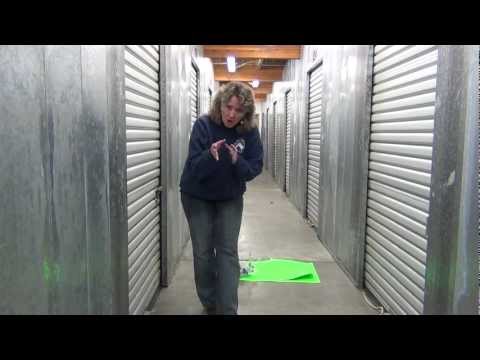
To grasp these techniques effectively, watch this short video by Missing Pet Partnership founder Kat Albrecht:
Set a safe trap if needed
To capture lost dogs that may not respond to calming signals, you may need a safe humane trap baited with an enticing treat. Some shelters, rescues, or lost-dog recovery groups offer trap-lending services, and experienced staff or volunteers may assist with setup and monitoring. Humane traps can also be found at hunting or outdoor retailers.
Place the trap in a discreet location, away from passersby, with a camera to monitor it. Before setting up, obtain permission from the property owner or management to avoid the trap being removed. If you successfully trap your dog, refrain from opening the cage outdoors — a frightened dog may flee again. Instead, transport the crate with your pet inside to your home or a vet, then release them indoors with all exterior doors closed.
Stay strong and don't give up
Locating a lost dog can be a daunting, nerve-wracking, and draining ordeal, yet maintaining hope is crucial. You never know when a neighbor might spot your pet or when they might turn up at a nearby shelter. Dogs have been found weeks and even months after going missing. The dogs who come home are the ones whose people kept searching.
Online resources
These tools and communities have helped reunite lost dogs with their families:
Shadow App Crowdsourced lost-pet alerts that mobilize your community when your dog goes missing. Nextdoor Hyper-local neighborhood network. Post a lost-dog alert and your immediate neighbors will see it. PawBoost Free lost pet alerts shared to a large rescue squad of volunteers, plus targeted social media reach. Lost My Doggie Lost-dog alert service that broadcasts to local shelters, vets, and pet professionals in your area. Helping Lost Pets Map-based national lost-and-found database with social network integration.Los Angeles area lost & found groups
- LA County Lost & Found Pets (Facebook)
- LA City Lost & Found Pets (Facebook)
- LA general Lost & Found Pets groups (Facebook)
Outside Los Angeles? Search Facebook for "[your city] lost and found pets" to find your local group.
Prevention is the better story
Most lost-dog stories are preventable with a few simple habits we covered earlier in this course:
- Microchip your dog and keep the registration current. Update your phone number whenever it changes.
- Collar with ID tags, always. Even on indoor dogs. The number-one identifier of a found dog is a phone number on a collar.
- Secure your fences and doors. Walk the perimeter of your yard once a season looking for gaps. Train a solid "wait" at every door so your dog doesn't bolt when it opens.
- Leash at all times on walks and hikes. A trained dog with a perfect recall is still a dog who can panic at a sudden noise.
Trust your gut. If something is telling you your dog isn't safe — act on it. Your persistence, your calm, and your refusal to give up are often what brings them home.
Life stages — puppy through senior.
A dog is not the same dog at one year old, three years old, and ten years old. Their bodies change. Their brains change. Their needs change. Knowing what stage your dog is in — and what's normal at that stage — is one of the most useful frameworks you can carry across their whole life.
Puppyhood (0–1 year)

No other period in a dog's life is as formative as the first twelve months. The brain is building itself in real time. The nervous system is learning what is safe and what is not. The foundations of personality, resilience, confidence, and social skills are being laid in ways that will shape everything after.
The socialization window — 3 to 12 weeks
This is the most important developmental period in a dog's life. The window is the span during which a puppy's brain is specifically primed to absorb new experiences and form lasting associations. What a puppy encounters during this window — and just as importantly, what they don't — shapes their emotional responses to the world for the rest of their life.
Around twelve weeks the window begins to close. Experiences introduced after this point require significantly more repetition to build positive associations.
Many puppies who come through rescue and shelter systems arrive with incomplete or unknown socialization histories. A puppy who spent their first weeks in a stressful or chaotic environment may have gaps that show up later as fearfulness, sound sensitivity, or wariness around new people. This is not a character flaw — it is the nervous system doing exactly what it was built to do. With consistent, positive, low-pressure exposure going forward, most of those gaps can be meaningfully narrowed.
What socialization actually means
Socialization does not mean exposing a puppy to as many things as possible as fast as possible. It means introducing the puppy to the breadth of the world they will live in — people of different ages and energy levels, other animals, sounds, surfaces, environments — at a pace where the experience is positive. A scared puppy is not being socialized. They are being sensitized.
Practical guidance: vaccinated puppies should be carefully exposed to the world while the window is open, not held in isolation until they're "fully vaccinated." The behavioral risks of under-socialization usually outweigh the disease risks for most carefully managed exposures. Talk with your vet about what's appropriate for your area.
Other puppyhood basics
Crate training, potty training, basic commands, gentle bite inhibition, exposure to grooming and handling, getting comfortable with the vet — all of this happens in puppyhood. Our New Puppy Central section on the website covers each of these in depth.
Adolescence (1–3 years)
Here's something nobody tells you when you bring home a puppy: somewhere around their first birthday, they are going to become a teenager. Not a bad dog. Not a broken dog. A teenager — full of energy and curiosity and an almost comedic belief that the rules were written for someone else.
Adolescence is one of the most entertaining chapters of dog parenthood, if you go into it knowing what to expect. The dog who once responded to every cue with eager precision now seems to be considering your requests as politely worded suggestions. The couch rule, apparently, is open to renegotiation.
What's actually happening
Adolescence is driven by two overlapping biological processes: the surge of sex hormones that accompanies sexual maturity (around six months in most breeds, later in large and giant breeds), and the still-in-progress development of the prefrontal cortex — the part of the brain responsible for impulse control, focus, and the ability to choose a trained response over an instinctive one.
The prefrontal cortex is not fully mature in dogs until somewhere between eighteen months and three years. During this window, your dog is genuinely, neurologically less capable of the sustained focus and reliable impulse control they showed at four months. This is not stubbornness. It is not defiance. It is a brain that is still being built.
What helps
- Adjust expectations, not effort. Adolescence is not the time to stop training — it's the time to make training feel like play.
- Keep sessions short, successful, and rewarding.
- Up the exercise. A tired adolescent is a much more cooperative adolescent.
- Manage the environment. Fewer chances to rehearse unwanted behaviors. Use baby gates, crates, leashes.
- Stay calm. Your dog is not regressing forever. Research finds that the strength of your relationship buffers this phase — dogs with secure, trusting attachments have an easier adolescence.
Adulthood (3–7 years)

If puppyhood is the foundation and adolescence is the storm (totally worth it, by the way), adulthood is the reward. Somewhere around two to three years — often quietly, without announcement — your dog becomes themselves. The adolescent turbulence settles. The impulse control that seemed like it would never fully arrive is suddenly, reliably there.
The adult years are the full-bloom chapter — the dog at their most capable, the relationship at its deepest, the daily experience of each other at its richest.
Physical maintenance is the priority
- Annual veterinary wellness exams.
- Dental health — periodontal disease is one of the most common conditions in adult dogs, and one of the most preventable.
- Weight management — adulthood is when weight quietly creeps up, especially in less active dogs and dogs who have been spayed or neutered.
- Year-round parasite prevention.
- Exercise calibrated to your specific dog.
Don't let routine become monotony
One of the quieter risks of the adult years is the drift toward routine that becomes monotony. The adult dog who has learned the rules and settled into the household may appear content — and often is — but mental under-stimulation accumulates and eventually shows up as boredom behaviors, anxiety, or a flatness that's easy to miss. Continued training, scent work, novel environments, and time together are not optional. They are how the adult years stay rich.
Senior years (7+ years for most dogs)

There is something that happens when a dog gets old. The energy softens. The face goes gray. They take longer to get up, and they sleep in the sun with a depth and contentment that younger dogs haven't discovered yet. The senior years are not the diminished version of what came before. They are something entirely their own — slower, more intentional, full of a kind of love that has been earned through years of daily life. The dog who greets you from their bed instead of launching themselves at the door has not become less. They have become more themselves.
When is a dog senior?
- Small breeds (under 20 lbs): generally senior around 10–11 years; many live well into their mid-teens.
- Medium breeds (20–50 lbs): generally senior around 8–9 years.
- Large breeds (50–100 lbs): generally senior around 7–8 years.
- Giant breeds (over 100 lbs): may be senior as early as 5–6 years; their lifespans are shorter, which makes every year with them even more to be savored.
What's changing
Joints and mobility. Arthritis is one of the most common conditions in senior dogs — and one of the most underdiagnosed. Watch for reluctance to climb stairs, stiffness after rest, gait changes, irritability, less interest in play. Pain management has come a long way; relief is often more available than pet parents expect.
Senses. Vision (a bluish haze called nuclear sclerosis is normal and doesn't significantly impair sight; true cataracts should be evaluated). Hearing (gradual loss is common; hand signals introduced earlier in life are a kindness now). Smell (holds up better than vision and hearing).
Coat and lumps. Gray muzzle. Coarser or thinner coat. Lipomas and benign growths are common — but every new mass deserves a vet check, because early awareness is always better than late discovery.
Weight. Metabolism slows. Both unexpected weight gain and unintended weight loss are worth a vet conversation.
The mind. Canine Cognitive Dysfunction (CCD, sometimes called doggy dementia) affects many older dogs. Signs: disorientation in familiar spaces, changed sleep cycles, withdrawal, house-training regression, staring blankly, anxiety. CCD is not curable, but it is absolutely manageable. Ask your vet about supplements, medications, dietary support, and enrichment strategies that help.
The senior years are precious
Slow walks become the activity of the day. Sniffing time becomes more important than distance. The morning routine becomes a sacred ritual. Photograph your senior dog more than you think you need to. Tell them they're beautiful. They are.
End-of-life care
The Good Boy Foundation has a dedicated section for the end-of-life journey — quality of life, comfort care, and what comes next — because it deserves its own space, approached with the care and honesty it requires. Whenever the time comes that you need it, that resource is there for you.
No matter how much time you have with them, it's never enough. Heavy grief is a direct reflection of how deeply you loved.
Living the life — being the best dog parent ever.
Having a dog as a best friend brings boundless joy and unconditional love into our lives. Their wagging tails and joyful barks brighten our days, offering companionship and loyalty like no other. In return for their unwavering affection, we owe it to them to keep them healthy, safe, happy, and loved.
This module is the capstone — the daily practices that, taken together, add up to a life well-lived alongside a dog. None of it is dramatic. Most of it is small. All of it matters.
The everyday checklist of a great dog parent
Regular vet care
- Schedule annual check-ups. Don't put them off.
- Keep vaccinations up to date.
- Monitor and maintain dental health — daily brushing, not optional.
- Trust your gut if you think something might be wrong. See your vet.
A balanced diet
- Feed a high-quality, AAFCO-compliant food appropriate for life stage.
- Make sure everyone in the household understands what foods are safe and which are dangerous.
- Fresh water always.
- Measured portions, not guesses.
Exercise & play
- Daily physical activity — walks, runs, play.
- Regular playtime — tug, fetch, hide-and-seek.
- Mental stimulation through toys, puzzles, and training.
Training & socialization
- Use positive, force-free, fear-free methods, always.
- Expose your dog to varied environments and people, safely and at their pace.
- Encourage positive behavior with rewards and consistency.
- Make sure all members of the household are on the same page about what's allowed.
Grooming
- Brush regularly. Check skin while you do.
- Trim nails to a comfortable length.
- Bathe as needed — not too often.
Preventive care
- Year-round flea, tick, and heartworm prevention.
- Maintain a healthy weight as decided with your veterinarian.
Safety
- Leash at all times during walks and hikes. Just because your dog is well trained does not mean other dogs are.
- Secure yard, regularly checked.
- Microchip your dog. No excuses.
- Collar and ID tags, always on.
A comfortable home
- A cozy bed and a safe, warm, loving space.
- Shelter from extreme weather and heat.
- A clean living area, free of hazards.
Affection & attention
- Spend quality time with your dog daily.
- Show love through training, play, and positive interactions.
- Be conscious of never putting them in a situation that would set them up for failure.
- Pay attention to their emotional needs. Get help if you have any concern.
Routine & stability
- A consistent daily schedule as much as you can.
- Be patient and understanding during change.
- Remember they pick up on your feelings — if your dog seems stressed or excited, check in with yourself first.
Emergency preparedness
- Have a plan.
- A pet first-aid kit at home and in the car.
- Know the location of the nearest emergency vet, posted somewhere everyone can see it.
Lessons learned
These are pulled directly from the website's Lessons Learned page — wisdom that came from seventeen years with Deuce. They will serve any dog, any home, any pet parent.
- Be patient; never rush your dog.
- Stay off your phone during a walk. Be present with them — you'll be thankful you did one day when you no longer hold their leash in your hand.
- Appreciate and celebrate the small things.
- Learn a new trick every month. Practice training daily.
- Listen with the intent to understand, not just respond.
- Be patient with yourself and others.
- Let love and gratitude guide everything you do.
- Always show kindness; you never know what someone is going through.
- Friendship is a two-way street.
- Never take things for granted.
- No matter how much time you have with them, it's never enough.
- Heavy grief is a direct reflection of how deeply you loved.
- Brush their teeth every. single. day. No excuses.
- Trust your gut. If it's telling you something is wrong, do something about it.
- Don't assume that every dog you see on your walk wants to be friends or even approached. Always ask their guardian first.
- It's okay to tell people no when they go to pet your dog without asking. Always advocate for your dog.
A note on the hardest parts
If you do this well, for long enough, the hardest parts come too. Illness. Aging. Loss. The Good Boy Foundation does not pretend otherwise. We were founded in honor of a dog who is no longer here, and the work we do is partly an answer to that grief — a way to make sure other dogs, and other families, have what we wish more families had had.
If you find yourself in a season of difficulty — a cancer diagnosis, an end-of-life decision, the quiet grief that follows — please know that the Good Boy Foundation is here. Our work includes financial support for families navigating cancer treatments and compassionate end-of-life care. Our website holds resources for grief and loss. Heavy grief is a direct reflection of how deeply you loved. There is no wrong way to carry it, and no wrong time to ask for support.
You came here to learn. That's already most of what your dog will ever need from you — a person who came to learn. Now go love them well.
Thank you for showing up.
There is no such thing as fully ready for a dog. There is only walking in informed, attentive, and willing to grow. You've done that here. Your dog — current, future, foster, forever — is luckier for it.
Whether you came to this course because you're considering fostering or adopting your first dog, because you just brought a new dog home, or because you've shared your life with dogs for years and wanted a refresher — thank you. The fact that you came here at all says something about the kind of pet parent you are or the kind you're becoming. The dogs in your life will feel it, even on the days you doubt it. Especially on those days.
Take these printable resources with you
Your First 30 Days
A printable, day-by-day plan for the first month with a new dog. Opens in a new tab — use your browser's Save as PDF option to keep a copy.
The "Ready" Checklist
A pre-arrival walkthrough — supplies, household readiness, mindset. Opens in a new tab; save as PDF or print.
Your completion certificate
A Good Boy Foundation Pet Parent
Enter your name as you'd like it to appear on your certificate. The certificate opens in a new tab — use Cmd+P (or Ctrl+P) to save it as a PDF.
Tell us you finished
This is completely optional, but it helps us. Letting us know you completed the course tells us this work matters and helps us track impact. If you'd also like to hear from us when our monthly newsletter launches, check the box. We will not share your information with anyone.
Where to go from here
The website is full of resources designed to keep you company through every stage of your dog's life — from puppy through senior, through health, through training, through the hardest moments and the most beautiful ones. If you ever need help, please reach out before you reach the end of your rope. The Good Boy Foundation exists for exactly that.
Keep learning The full education libraryVisit our complete library of in-depth resources for everything you could ever want to know about loving and caring for a dog. Always free, always accessible, 24/7 — for you and anyone you love who shares their life with one.
www.goodboyfoundation.org/educationLooking for the right rescue?
If you took this course because you're thinking about fostering or adopting but haven't found the right rescue or shelter yet, this is your starting point. Enter your zip code below and we'll open a search for reputable rescues and shelters in your area, powered by Petfinder — the largest US directory of vetted rescues.
You can also explore these national networks: ASPCA, Best Friends Animal Society, Adopt a Pet.
When you reach out to a rescue, mention that you completed the Good Boy Foundation Pet Parent Course. The work you did here matters. Reputable rescues love to see it.
In honor of Deuce, in service of every dog who deserves a loving home — thank you for being the kind of person who came here to learn to give their dog the best life possible.