
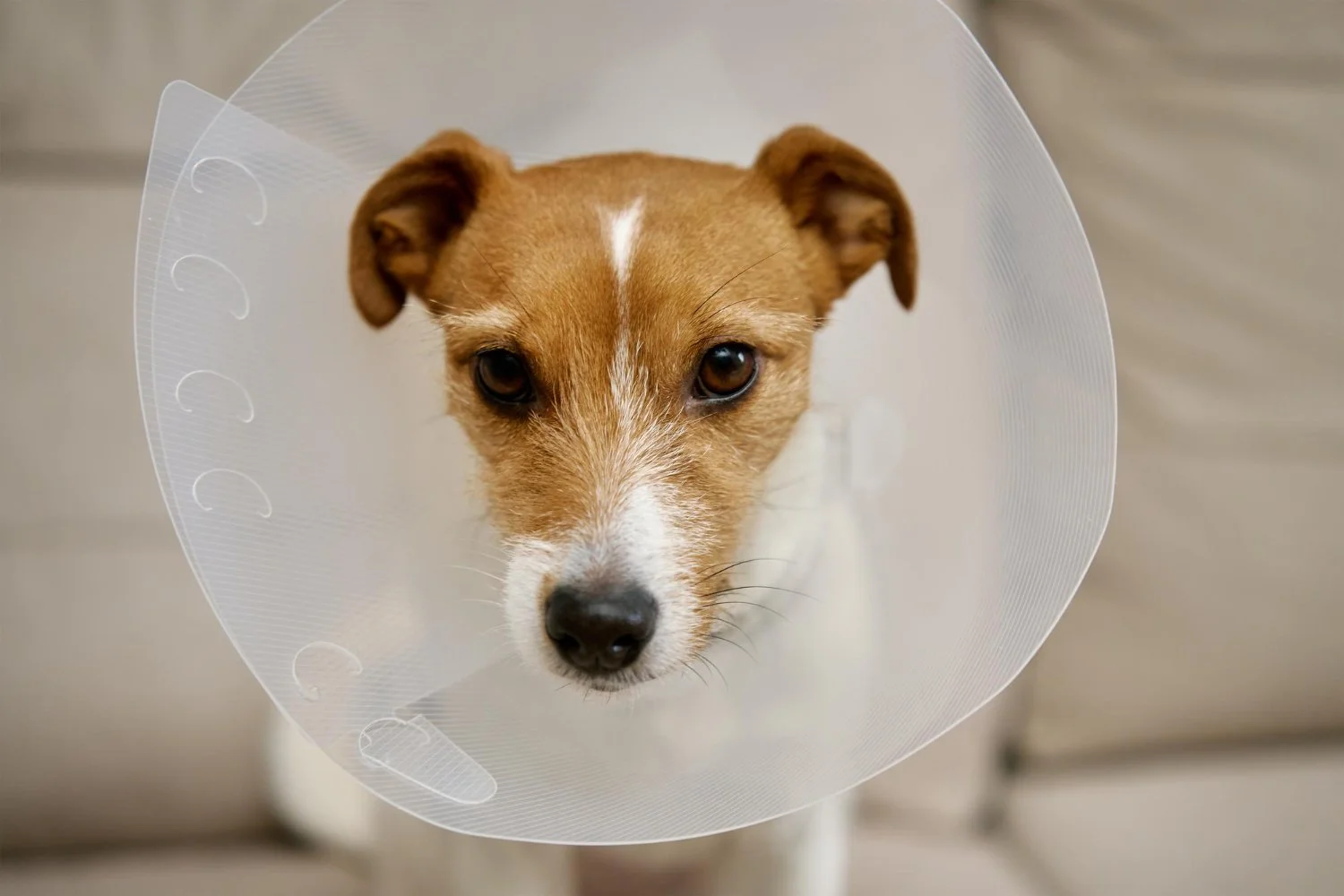
Coming home from surgery is disorienting for a dog. The anesthesia, the soreness, the cone around their neck, it's a lot to process. The two most important things you can do are: control their environment and stay calm yourself. Dogs read their owner's emotional state with remarkable accuracy.
What's Normal in the First 24–48 Hours
-
Grogginess, stumbling, or mild disorientation, normal effect of anesthesia
-
Sleeping far more than usual
-
Reduced appetite; offer small amounts of bland food (plain boiled chicken and rice)
-
Mild shivering, keep them warm with a blanket in a draft-free space
-
Some whimpering or restlessness, give prescribed pain medication as directed
Setting Up a Recovery Space
-
Quiet room, away from children, other pets, and noise
-
Soft bed at floor level, absolutely no jumping on or off furniture
-
Non-slip flooring or area rugs if floors are slippery
-
Temperature 68–75°F, warm and draft-free
-
Baby gate to block stairways and hazardous areas
-
Keep other pets separated, even friendly pets can accidentally injure a surgical dog
The E-Collar (Cone): Non-Negotiable
Dogs who lick incisions have up to 30% more post-operative complications. The cone stays on for the full recovery period (typically 10–14 days), during sleep, meals, and bathroom trips. It should extend 2 inches past your dog's nose to prevent access to the wound. If using an alternative (inflatable donut, soft recovery suit), confirm with your vet that it genuinely prevents access.
Incision Care
-
Check once or twice daily, edges should be closed, skin slightly pink
-
No baths, swimming, or water exposure for 10–14 days
-
Do not apply any ointment, hydrogen peroxide, or product unless your vet instructs
-
Keep your dog from licking, cone on at all times
Mental Stimulation Without Movement
-
Puzzle feeders and slow feeder bowls (used lying down)
-
Long-lasting chews appropriate to their post-surgery diet
-
Gentle training exercises: sit, stay, focus, brain work, no body work
-
Calming music, studies support classical music for reducing canine anxiety
Call Your Vet Immediately If You See:
-
Increasing redness at the incision after day 3
-
Swelling, or yellow/green or foul-smelling discharge
-
Wound edges separating or the incision opening, this is a veterinary emergency
-
Vomiting more than once, or refusal to eat for more than 48 hours
-
Difficulty breathing, pale gums, or extreme lethargy
-
Signs of significant pain not controlled by prescribed medication