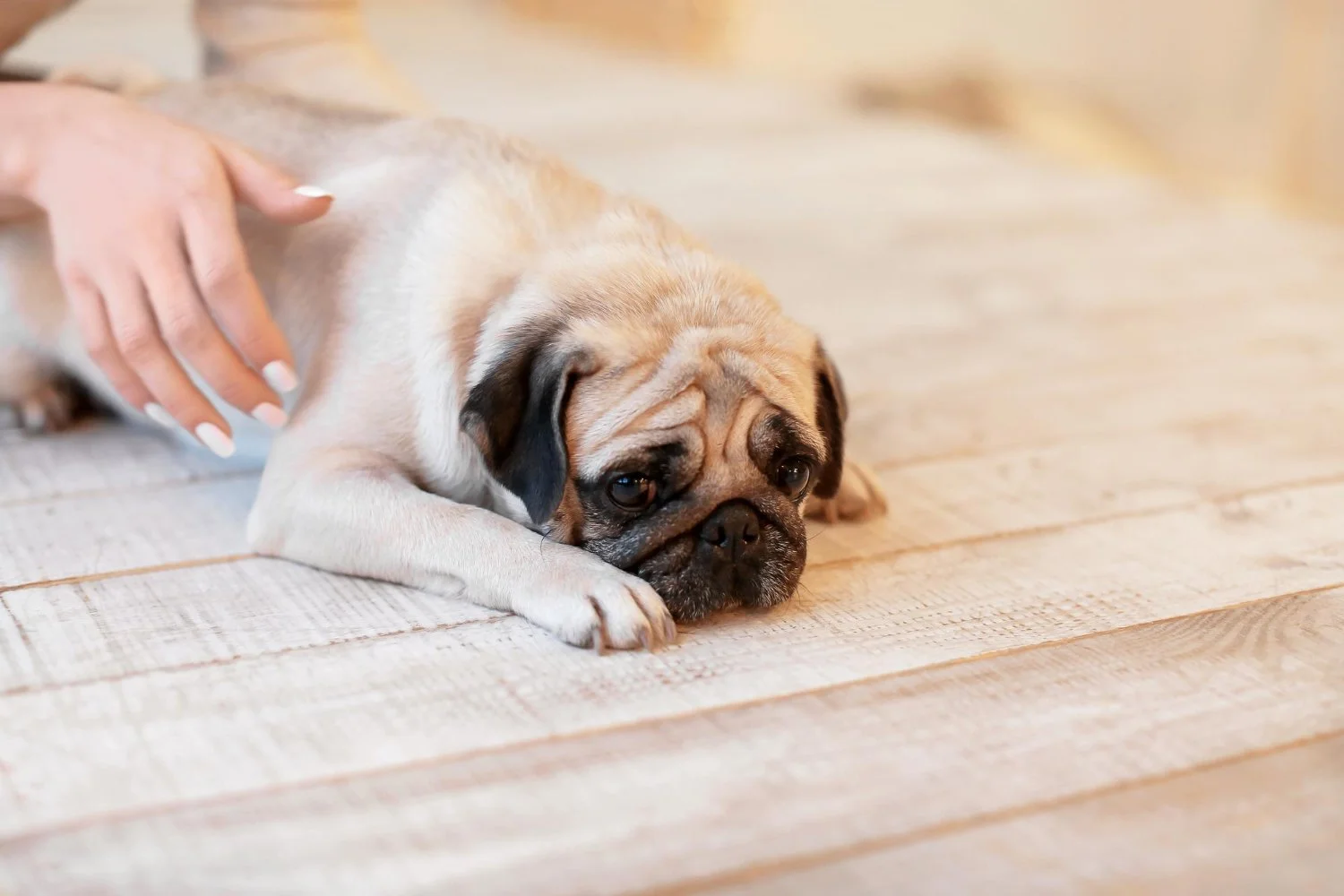

Dogs are wired to hide pain, an instinct inherited from ancestors who had to appear strong to survive. By the time a dog shows obvious signs of pain, they've often been hurting for a while. Knowing the subtle signals is one of the most important things a dog owner can learn.
Physical Signs
-
Limping or favoring one leg
-
Stiffness when getting up, especially after rest or sleep
-
Reluctance to climb stairs, jump into the car, or get onto furniture
-
Slowing down on walks, tiring more quickly
-
Muscle loss, particularly in the hindquarters
-
Swollen or warm joints
Behavioral Signs
-
Sleeping more than usual or seeming withdrawn
-
Irritability, snapping, or growling when touched in certain areas
-
Restlessness, getting up and lying back down repeatedly
-
Excessive licking or chewing at a specific body part
-
Panting at rest (a frequently overlooked signal)
-
Avoiding slippery floors or hesitating on uneven surfaces
-
Having accidents indoors, squatting to eliminate may be painful
-
Reduced interest in food, play, or interaction
Many behaviors we attribute to 'just getting old', slowing down, sleeping more, becoming grumpy, losing interest in play, are often signs of manageable pain.
Dogs do not have to live in discomfort as a normal part of aging. If something feels off, it's worth a conversation with your vet.