
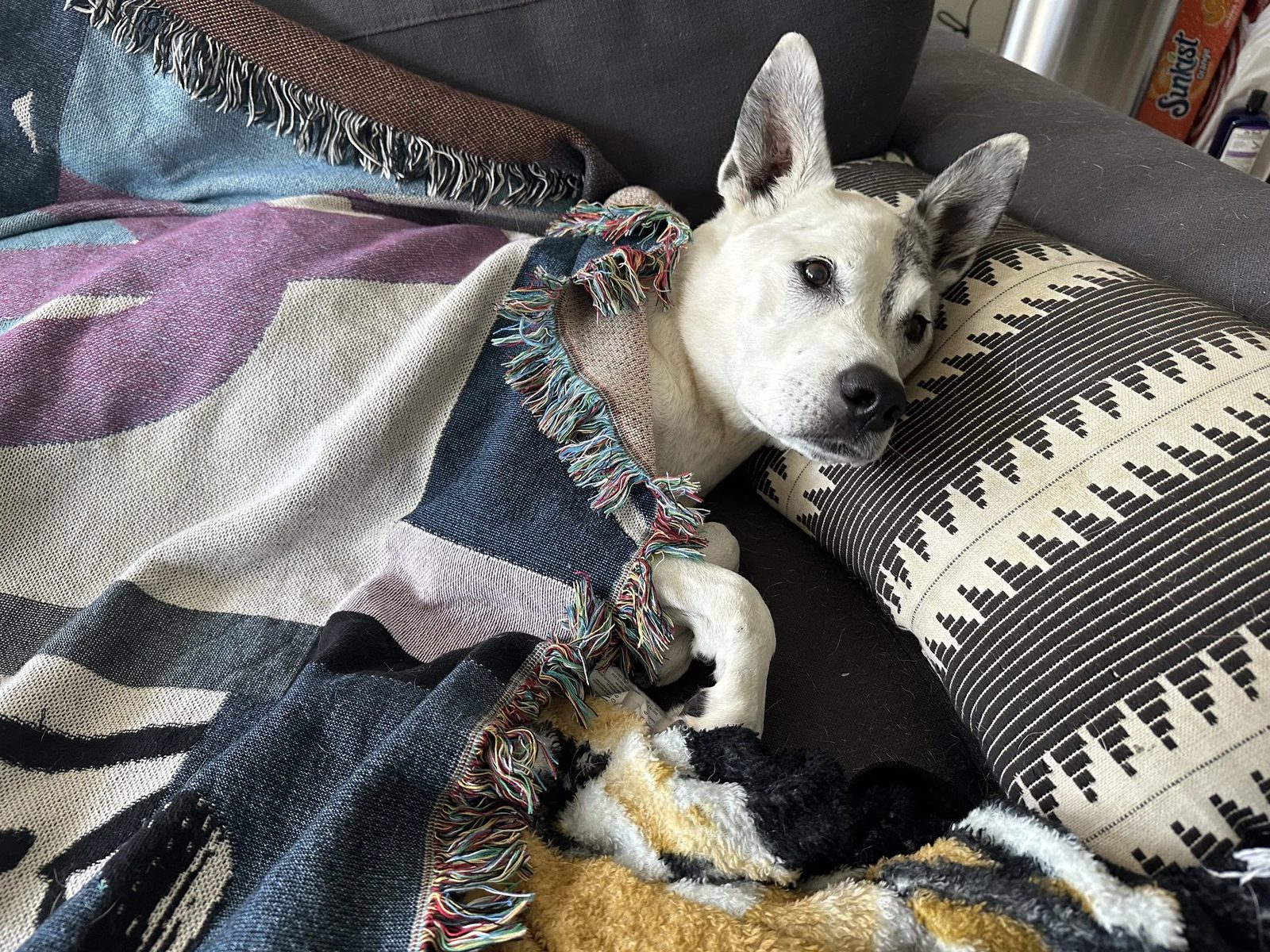
If you have ever felt that losing your dog was harder than losing a person, you are not alone, and you are not wrong to feel that way. Research supports what grieving pet parents have always known intuitively: the bond between humans and dogs is one of the most powerful and biologically embedded relationships we can have.
Dogs have been our companions for at least 15,000 years. Over that time, they evolved alongside us. They learned to read our faces, our moods, our intentions. They release oxytocin, the same bonding hormone involved in parental love, when they look at us. We release it back. This is not metaphor. This is neurochemistry. The bond is real, and when it breaks, the grief is real.
For many pet parents, a dog is also a constant. They are there every single day. Other close relationships come and go, have their own lives, go to work, travel. Your dog is present across nearly every memory you make at home for a decade or more. The loss is woven through every room, every routine, every ordinary Tuesday.
A study published in the journal Current Biology found that dogs are uniquely attuned to human emotional states and can distinguish between happy and sad human faces, responding differently to each.
They are not simply animals who live with us. They are social companions who are watching, responding, and emotionally oriented toward us at all times. When that presence disappears, the loss registers in us the same way any deeply intimate loss does.