
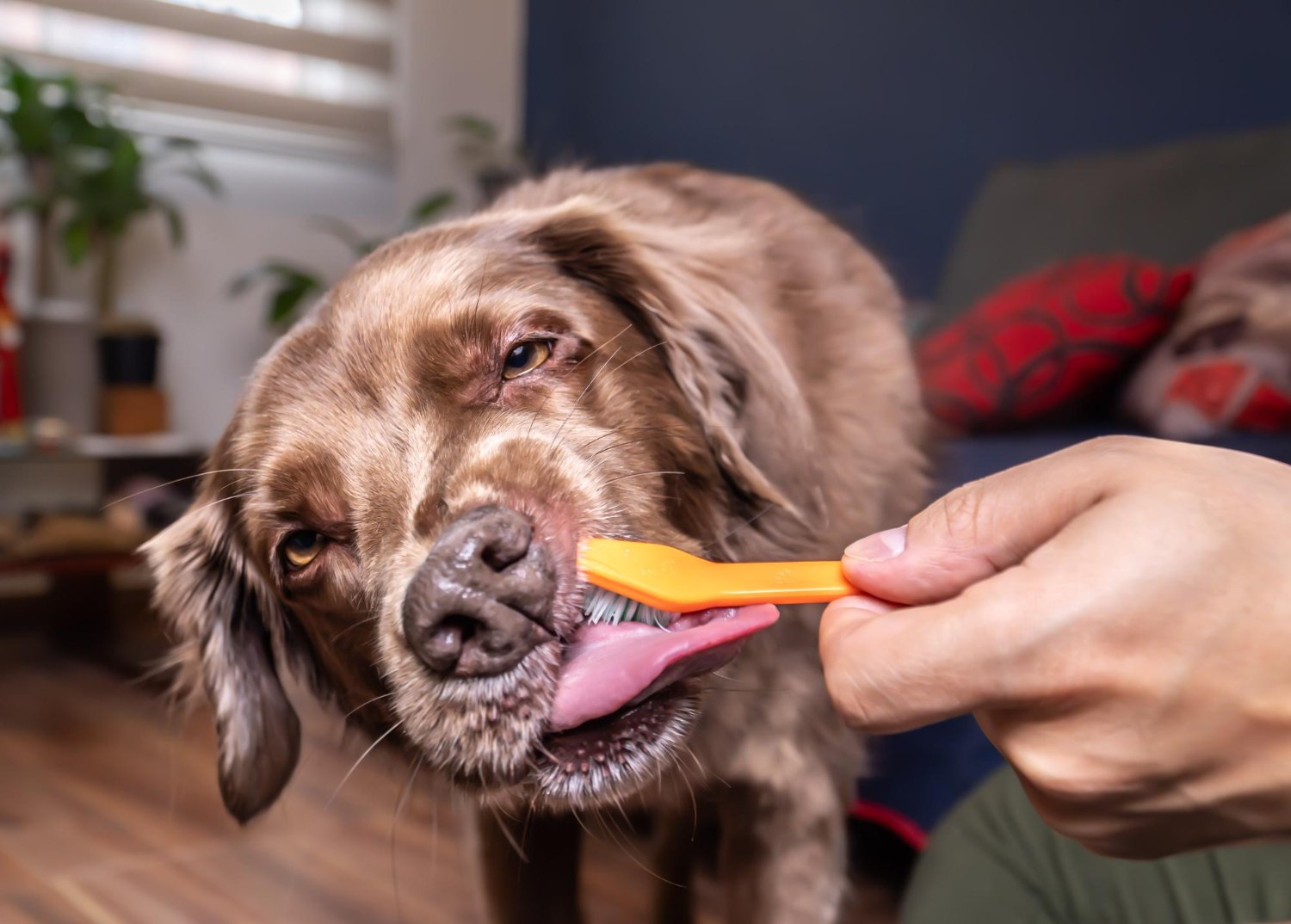
Keeping your dog clean and well-groomed isn't just about appearances, it's one of the most hands-on ways to protect their health. Regular brushing, bathing, nail trims, ear checks, and dental care all give you consistent, close-up time with your dog's body, which means you're more likely to notice something off before it becomes a bigger problem. This section covers what to do, how often to do it, and what to watch for so you can keep your dog comfortable, healthy, and feeling their best.
Dental Health & Hygiene
Why Your Dog's Teeth Matter More Than You Think
By the time most dogs are three years old, more than 80% already have some form of periodontal disease, and most of their owners have no idea. Dental disease isn't just a teeth problem. The bacteria that build up under the gumline can enter the bloodstream and affect the heart, kidneys, and liver. It's one of the most preventable health conditions in dogs, and one of the most commonly overlooked.
The good news: a little consistency at home goes a long way.
What's Actually Happening in Your Dog's Mouth
When your dog eats, bacteria mix with saliva and food particles to form plaque, a soft, sticky film that coats the teeth. If plaque isn't removed, it hardens into tartar (also called calculus) within days. Tartar can't be brushed off; it has to be removed by a veterinarian under anesthesia. Over time, tartar buildup leads to gingivitis (inflamed gums), then periodontal disease, infection and destruction of the tissue and bone that hold the teeth in place.
Once periodontal disease takes hold, it's painful, progressive, and irreversible. Prevention is far easier than treatment.
Signs of Dental Problems
Don't wait for your dog to tell you something hurts, they usually won't. Dogs are remarkably good at hiding mouth pain. Watch for:
-
Bad breath that's new or noticeably worse (not just "dog breath", truly foul odor)
-
Yellow or brown buildup along the gumline
-
Red, swollen, or bleeding gums
-
Dropping food, chewing on one side, or reluctance to eat
-
Pawing at the mouth or face
-
Loose teeth or teeth that have visibly changed color
If you notice any of these, call your vet. Dental disease that's caught early is far easier to treat.
What You Can Do at Home
Brushing is the single most effective thing you can do. Daily brushing removes plaque before it hardens, and research shows it's three times more effective than dental chews or special diets alone. Even brushing a few times a week makes a meaningful difference.
How to get started:
-
Use a toothbrush designed for dogs (finger brushes work well for beginners) and toothpaste made specifically for dogs, human toothpaste contains ingredients that are toxic to dogs, including xylitol and fluoride
-
Start slow: let your dog sniff and lick the toothpaste first, then work up to touching the teeth and gums with the brush over several sessions
-
Focus on the outsides of the teeth, especially the back upper molars where tartar tends to build up fastest
-
Keep sessions short and positive, even 30 seconds done consistently beats a perfect 2-minute session that never happens
What else helps:
-
Dental chews, water additives, and certain diets can support oral health as a supplement to brushing, but look for products that carry the VOHC Seal (Veterinary Oral Health Council). Only products that meet clinical standards for reducing plaque or tartar earn that seal. Your vet can recommend specific options.
-
Dental chews are not a substitute for brushing, but they're better than nothing for dogs who won't tolerate a toothbrush.
Professional Dental Cleanings
No matter how diligent you are at home, your dog will still need professional dental cleanings, the question is just how often. A professional cleaning done by your veterinarian under general anesthesia is the only way to remove tartar, clean below the gumline, probe for pockets of infection, and take dental X-rays to assess what's happening in the roots and bone.
A note on anesthesia: The idea of anesthesia can feel scary, but anesthesia-free dental cleanings, sometimes offered at pet stores or groomers, only address the visible surface of the tooth. They can't clean below the gumline where disease actually lives, and they can cause stress that makes future dental care harder. AAHA and AVMA both recommend that dental procedures in dogs be performed under general anesthesia. Modern veterinary anesthesia is very safe, and your vet will run pre-anesthetic bloodwork to make sure your dog is a good candidate.
How Often Does My Dog Need a Cleaning?
It depends on the dog. Small breeds tend to accumulate tartar faster than large breeds. Dogs who tolerate brushing well may go longer between professional cleanings. Your vet will assess your dog's mouth at every wellness exam and recommend a cleaning schedule based on what they see. For most adult dogs, once a year is a reasonable starting point.

Grooming, Bathing, Brushing & Coat Care
More Than a Beauty Routine
Grooming isn't just about how your dog looks, it's one of the most consistent ways to monitor their health. Every bath, brush, and trim is an opportunity to notice changes: a new lump, a skin irritation, a sore spot your dog flinches away from. Dogs who are groomed regularly are handled regularly, and that familiarity pays off when something's wrong.
Brushing
Regular brushing removes loose fur, prevents painful matting, distributes natural skin oils through the coat, and reduces shedding around your home. How often you need to brush depends entirely on your dog's coat.
A few tips: always brush before bathing (wet tangles are nearly impossible to remove), work section by section down to the skin rather than just skimming the surface, and use an appropriate tool for your dog's coat type, a slicker brush, deshedding tool, or wide-tooth comb depending on what you're working with. Your groomer can recommend what works best.
Matting: Mats aren't just cosmetic problems. Severe matting pulls painfully on the skin, traps moisture and bacteria, and can hide wounds or parasites underneath. If a mat is too tight to work out gently with a detangler spray and your fingers, take your dog to a groomer, cutting them out without the right technique can injure the skin underneath.
Bathing
Most dogs need a bath about once a month under normal circumstances, or whenever they're noticeably dirty or smelly. Bathing too often strips the skin of its natural protective oils and can lead to dryness, flaking, and irritation. Dogs with certain skin conditions may need more or less frequent bathing, your vet will guide you.
What to use: Always use a shampoo formulated specifically for dogs. A dog's skin has a different pH than human skin, and human shampoos, even "gentle" or "baby" formulas, can disrupt that balance. A fragrance-free, hypoallergenic formula is a safe starting point for most dogs.
Step by step:
-
Brush out any tangles before getting your dog wet
-
Use lukewarm water, not hot
-
Wet the coat thoroughly before applying shampoo
-
Work the shampoo in from neck to tail, avoiding eyes and ears
-
Rinse completely, leftover shampoo residue causes skin irritation
-
Dry thoroughly, especially in skin folds and between toes where moisture can lead to yeast or bacterial growth
How Often?
-
Most dogs need a bath every 4–8 weeks
-
Bathing too frequently strips natural oils and dries the skin
Nail Trimming
Overgrown nails are uncomfortable and harmful. When nails are too long, they force your dog's toes into an unnatural position with every step, which over time contributes to joint pain, altered gait, and long-term orthopedic problems. You should be able to hear when nails need trimming: if they click on hard floors, they're too long.
Most dogs need their nails trimmed every 2–4 weeks. The best thing you can do is start handling your dog's paws regularly from puppyhood so that nail trims aren't a battle. If your dog is anxious about nail trims, go slowly, trim one nail at a time and pair it with high-value treats. Groomers and vets can also help, and many offer quick nail trim appointments without a full visit.
The quick: The pink area inside the nail contains blood vessels and nerves. Cutting into it is painful and causes bleeding. On dogs with light-colored nails, you can usually see it and avoid it. On dark nails, trim small amounts at a time and look for a dark spot in the center of the cut surface, that's where you stop.
Professional Grooming
Some breeds require professional grooming to keep their coat in good condition, Poodles, Doodle mixes, Shih Tzus, Bichons, and similar breeds need a trim every 6–8 weeks in addition to daily home brushing. Long-haired breeds that don't need trimming may still benefit from professional deshedding treatments a few times a year.
If you're unsure what your dog's coat needs, a groomer is a great resource, they can show you the right tools and technique for your specific dog.
Ear Hygiene & Ear Health
The Ear Problem You Might Not See Coming
Ear infections are one of the most common reasons dogs visit the vet, and they're almost always preventable with routine at-home monitoring and cleaning. The trouble is that problems in the ear canal aren't visible from the outside. By the time a dog is obviously uncomfortable, an infection is often already well underway.
A few minutes of ear care each week can make a significant difference.
What to Look For
Make a habit of checking your dog's ears once a week. Healthy ears look clean and light pink, smell neutral, and your dog doesn't react when you touch them. Reach out to your vet if you notice:
-
An unpleasant or musty odor
-
Dark brown or black discharge
-
Redness, swelling, or visible irritation inside the ear flap
-
Your dog scratching at their ears, shaking their head frequently, or tilting their head to one side
-
Sensitivity or pain when you touch the ear area
These can all be signs of infection, bacterial, yeast, or both, and they won't resolve on their own. Untreated ear infections can progress deeper into the middle and inner ear, where they become much more serious and harder to treat.
Which Dogs Are Most Prone to Ear Infections?
Any dog can get an ear infection, but some are significantly more susceptible:
-
Floppy-eared breeds (Cocker Spaniels, Basset Hounds, Bloodhounds), the ear flap traps warmth and moisture, creating an environment where bacteria and yeast thrive
-
Dogs who swim frequently, water that stays in the ear canal is a common trigger
-
Dogs with allergies, environmental and food allergies are one of the most common underlying causes of recurrent ear infections
-
Heavily coated breeds, hair inside the ear canal can trap debris and reduce airflow
If your dog falls into any of these categories, ask your vet how often they recommend cleaning and whether there are any preventive steps specific to your dog.
How to Clean Your Dog's Ears at Home
Routine cleaning helps prevent buildup, but it's important to do it correctly, improper ear cleaning can cause irritation or push debris deeper into the canal.
What you'll need: A veterinarian-approved ear cleaning solution and cotton balls or gauze pads. Do not use cotton swabs (Q-tips), they can push debris further in and risk damaging the eardrum.
How to do it:
-
Apply the cleaning solution generously into the ear canal, your vet can show you the right amount and angle
-
Gently massage the base of the ear (the cartilage you can feel at the bottom) for about 30 seconds, you should hear a squishing sound as the solution loosens debris
-
Let your dog shake their head, this brings loosened debris up and out
-
Wipe the visible part of the ear canal and the inner ear flap with a cotton ball, removing what came up. Only clean what you can see.
-
Repeat on the other side
How often: For most dogs, once every 1–2 weeks is a reasonable maintenance routine. Dogs who swim, have allergies, or have a history of infections may need more frequent cleaning, your vet will advise.
Important: Never clean your dog's ears if you suspect an active infection. Cleaning an already-inflamed ear can be painful and may make things worse. Take them to the vet first.