
Two at-home checks:
-
The Skin Tent Test: Gently pinch the skin at the back of your dog's neck or between the shoulder blades and let go. In a well-hydrated dog, it springs back flat immediately. If it stays "tented" or returns slowly, your dog is likely dehydrated.
-
The Gum Check: Press a finger against your dog's gums, then release. The spot should turn white briefly and return to pink within 1–2 seconds. If gums are dry, tacky, or the color takes longer to return, get to a vet.
When to go to the vet
Mild dehydration may be managed at home by encouraging water intake. But go to the vet immediately if:
-
Your dog is vomiting or has diarrhea and can't keep water down
-
Your dog is a puppy, senior, or already ill
-
Signs are worsening quickly
-
You see sunken eyes, extreme lethargy, or pale/grey gums
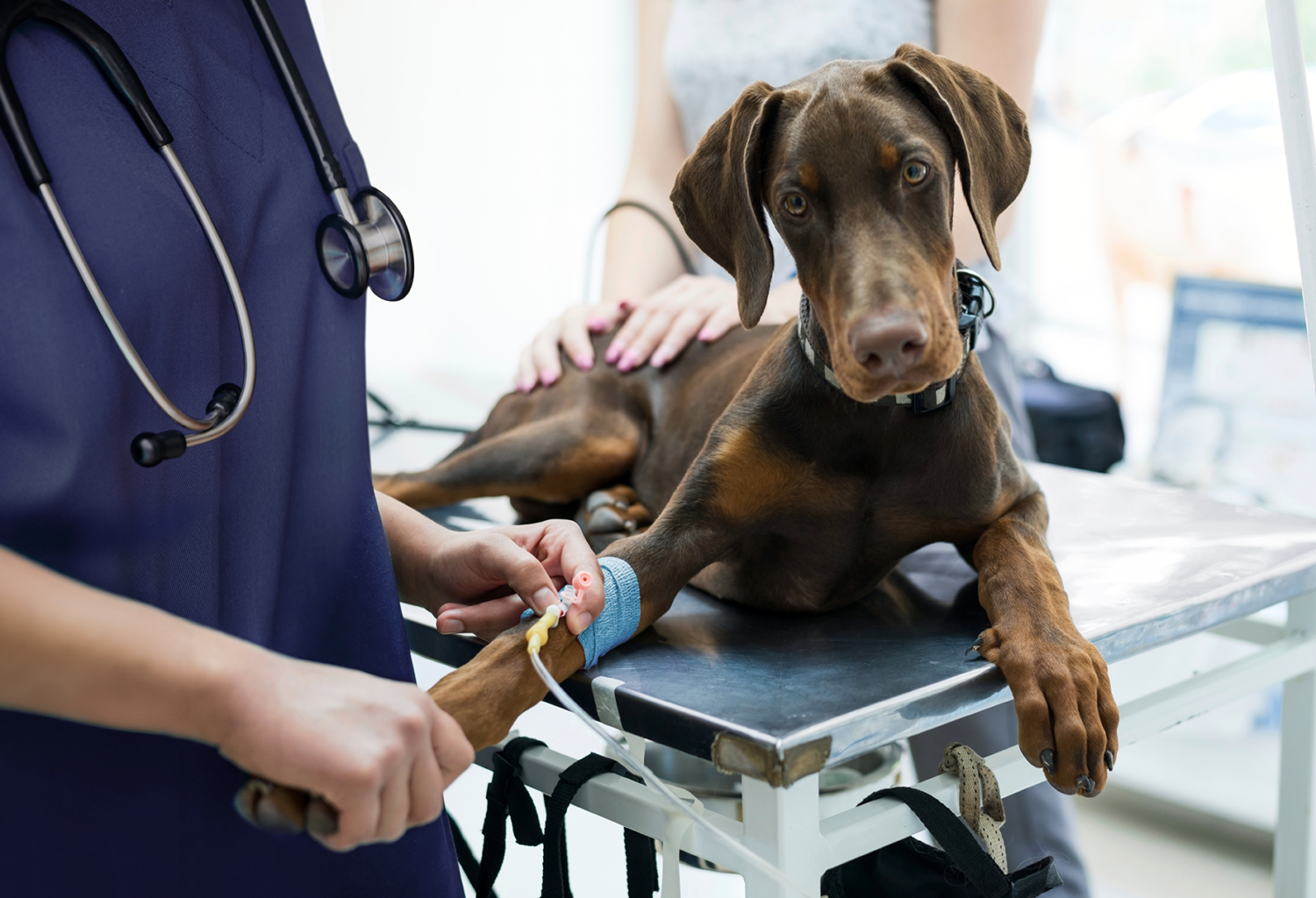
Vets treat dehydration with subcutaneous (under the skin) or IV fluids depending on severity.
Encouraging water intake: Keep fresh water available at all times, in multiple locations. On hot days or after exercise, offer small, frequent drinks rather than a large amount at once. You can also add low-sodium chicken broth to water to encourage drinking in reluctant dogs.
Dehydration isn't always dramatic, but it can escalate into a serious emergency quickly, especially in puppies, seniors, and sick dogs.
Dogs lose fluids constantly through panting, urination, and normal body functions. When fluid loss outpaces intake, from illness, vomiting, diarrhea, heat, or simply not drinking enough, dehydration sets in.
Signs of dehydration:
-
Lethargy and loss of energy
-
Loss of appetite
-
Dry or sticky gums
-
Sunken eyes
-
Thick, ropy saliva
-
Reduced or dark-colored urine