Dogs cannot sweat. They cool themselves almost entirely through panting, and when panting isn't enough, their body temperature can spike to dangerous levels within minutes.
Normal body temperature for a dog is 101–102.5°F. Once temperature climbs above 104°F, you're in heat exhaustion territory. Above 106°F is heatstroke, a life-threatening emergency that can cause organ failure, brain damage, and death.
Early signs (heat exhaustion):
-
Heavy, excessive panting
-
Increased drooling
-
Restlessness or seeking cool surfaces
-
Mild lethargy or slowing down
-
Increased thirst
Emergency signs (heatstroke):
-
Uncontrolled, frantic panting
-
Bright red or very pale/grey gums
-
Vomiting or diarrhea (may be bloody)
-
Glazed, unfocused eyes
-
Stumbling, weakness, or collapse
-
Seizures
-
Loss of consciousness
What to do, act immediately:
-
Move your dog out of the heat into shade or air conditioning right away
-
Begin cooling with room temperature water, wet towels placed on the neck, armpits, and groin; wet the paw pads; run cool (not cold) water over the body
-
Do not use ice or ice-cold water, this causes blood vessels to constrict, trapping heat inside and potentially sending the dog into shock
-
Point a fan at your dog while cooling
-
Get to an emergency vet as fast as possible, cooling before you arrive has been shown to increase survival rates from 50% to 80%
-
Call ahead so the clinic is ready when you arrive
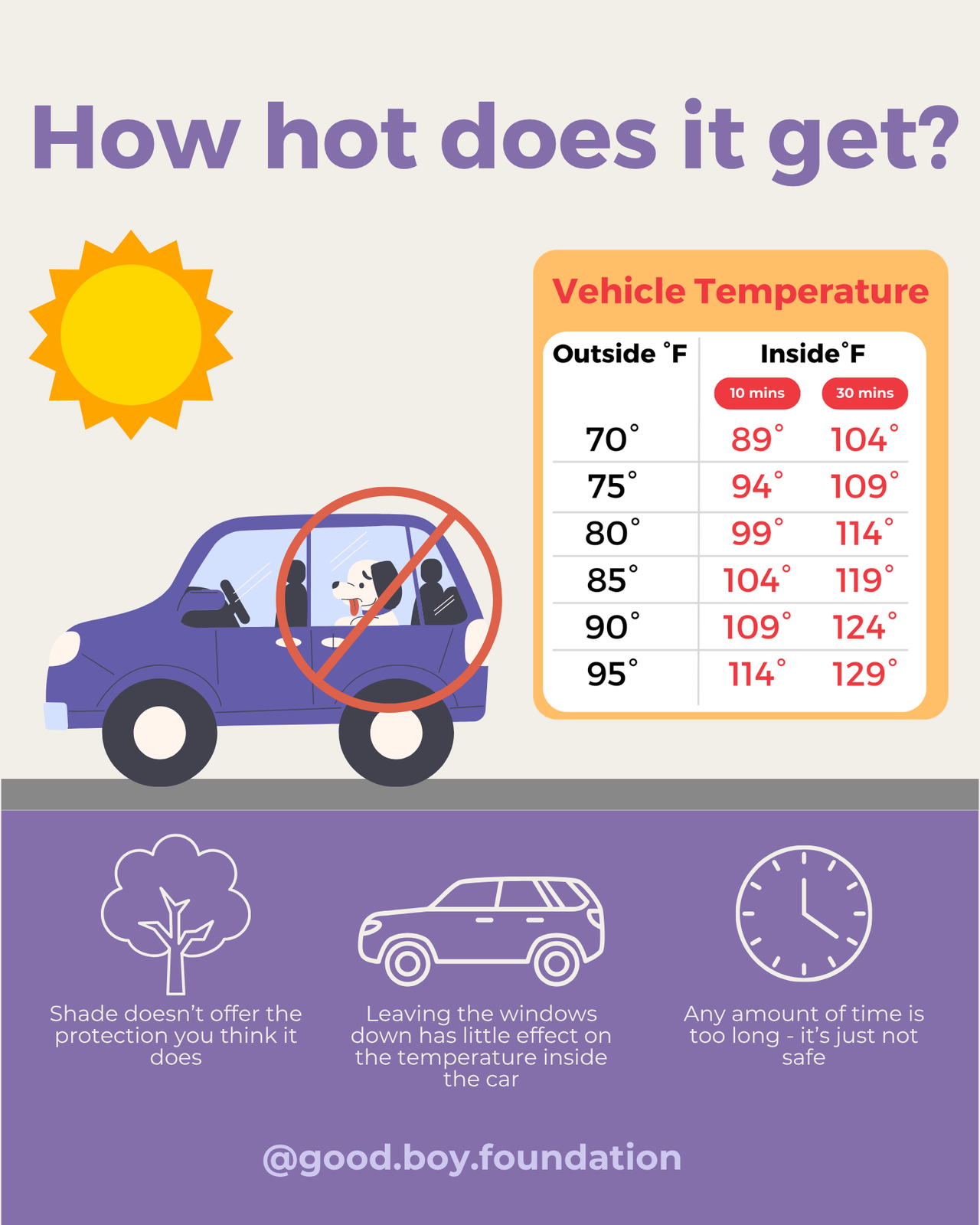
Never leave your dog in a parked car. On an 85°F day, the inside of a car reaches 102°F in just 10 minutes and 120°F within 30 minutes, even with the windows cracked. This is not a gray area: it is a medical emergency waiting to happen.
High-risk dogs: Brachycephalic (short-nosed) breeds like Bulldogs, Pugs, and French Bulldogs; overweight dogs; very young puppies and senior dogs; dogs with heart or respiratory conditions; and dogs that are not acclimated to heat.