
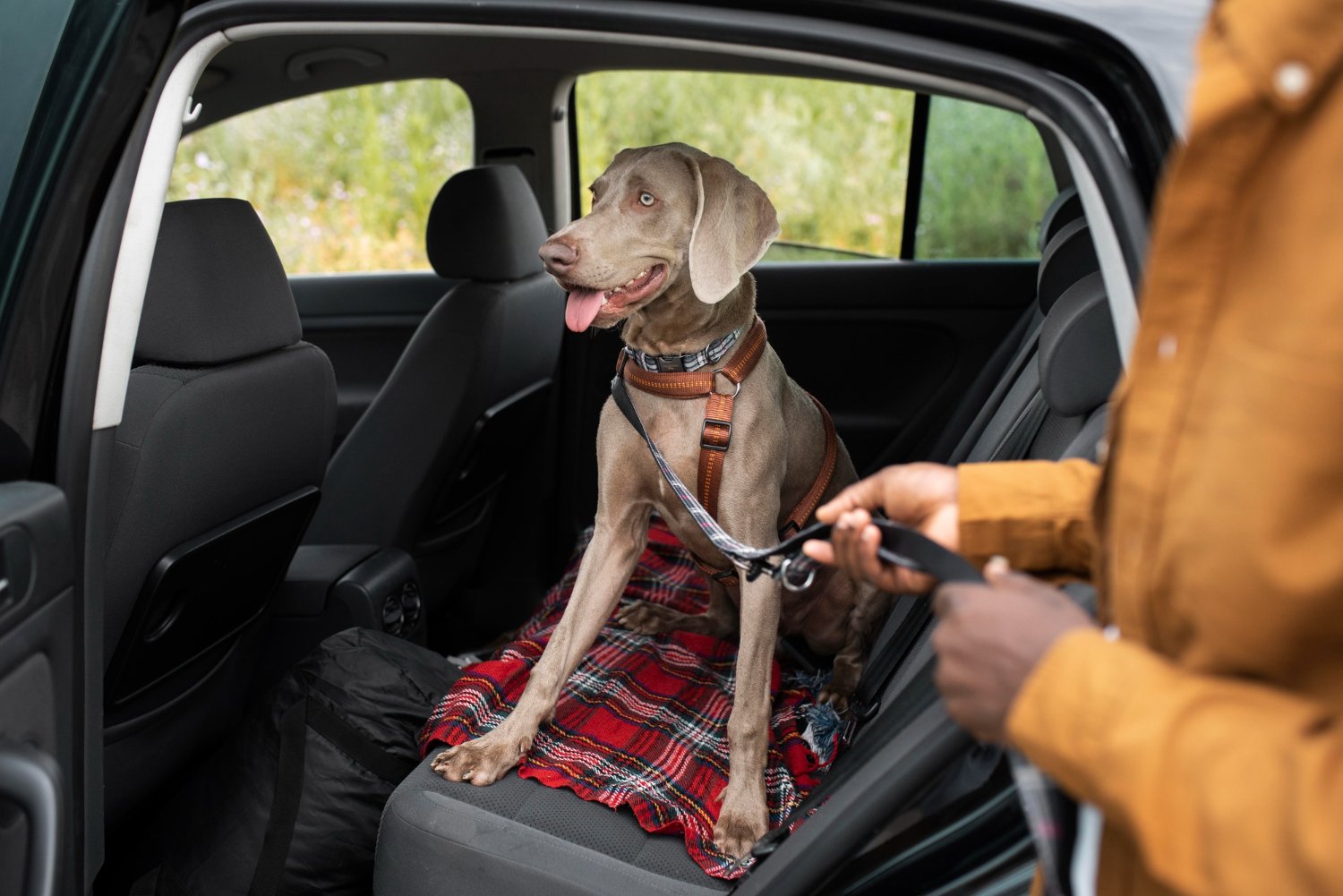
Does your dog get carsick? You're not alone. Motion sickness and car anxiety are surprisingly common in dogs, and they can make travel stressful for everyone. The good news is that both are very manageable with the right approach.
What Causes Dog Car Sickness?
Motion sickness in dogs is caused by stimulation of the vestibular system in the ear, which controls balance and equilibrium. It's especially common in puppies, because their vestibular system isn't fully developed yet, and most puppies grow out of it as they get older. However, some dogs develop a conditioned stress response over time, associating the car with feeling unwell. For these dogs, even the sight of the car or the sound of jingling keys can trigger anxiety.
Signs to Watch For
Motion sickness isn't always as obvious as vomiting. Your dog may show subtler signs, including excessive drooling, increased licking and swallowing, stress panting (heavy breathing not caused by heat or exercise), whining, decreased activity or listlessness, or yawning and restlessness. If you notice any of these during car rides, your dog may be experiencing motion sickness or car anxiety.
How to Help
There are several approaches that can reduce or prevent motion sickness, and you may need to try a combination to find what works best for your dog.
-
Secure them facing forward: An unsecured dog who is watching scenery whip by out a side window gets much more vestibular stimulation than one who is anchored and facing forward. A booster seat or crate that faces the front of the car can help significantly.
-
Keep the car cool and ventilated: Warmth can make nausea worse. Crack the windows for fresh air and keep the temperature comfortable.
-
Limit food before the trip: Avoid feeding your dog for four hours before travel. An empty stomach is less likely to become an upset one.
-
Use calming tools: A compression shirt like a ThunderShirt applies gentle, constant pressure, similar to swaddling, that many dogs find reassuring. Calming pheromone sprays like Adaptil/ThunderEase can be used to treat the car seat before travel. Calming supplements with ingredients like melatonin or natural herbal extracts may also help, talk to your vet about what's appropriate for your dog.
-
Try natural remedies: Some dogs respond well to ginger or turmeric/curcumin with ginger for nausea support. Ask your vet before introducing any supplement.
-
Over-the-counter medications: Diphenhydramine (Benadryl) and dimenhydrinate (Dramamine) can be effective for some dogs. However, because many human formulations contain other ingredients like acetaminophen or phenylephrine that are dangerous to dogs, always look for single-ingredient products and consult your veterinarian before giving any medication, even OTC ones. Your vet may also be able to prescribe prescription anti-nausea or anxiety medication if needed.
Training Can Help
For dogs whose car anxiety has become a conditioned response, behavioral training can help them build a new, positive relationship with the car. The key is to go slowly and never push them past their comfort level.
Start by identifying the exact moment your dog begins to show stress, is it when they see the car? When the engine turns on? Begin your training at the step right before that moment. For a dog who stresses when the engine starts, let them get in the car while it's off and feed them high-value treats for two to three minutes, then let them out and end the session. Repeat this daily until your dog is excited to get in the car, then gradually progress to turning on the engine, then backing out and returning, then short drives. Each step should be mastered before moving to the next. This type of gradual, positive exposure, paired with motion sickness management tools, can make a tremendous difference over time.