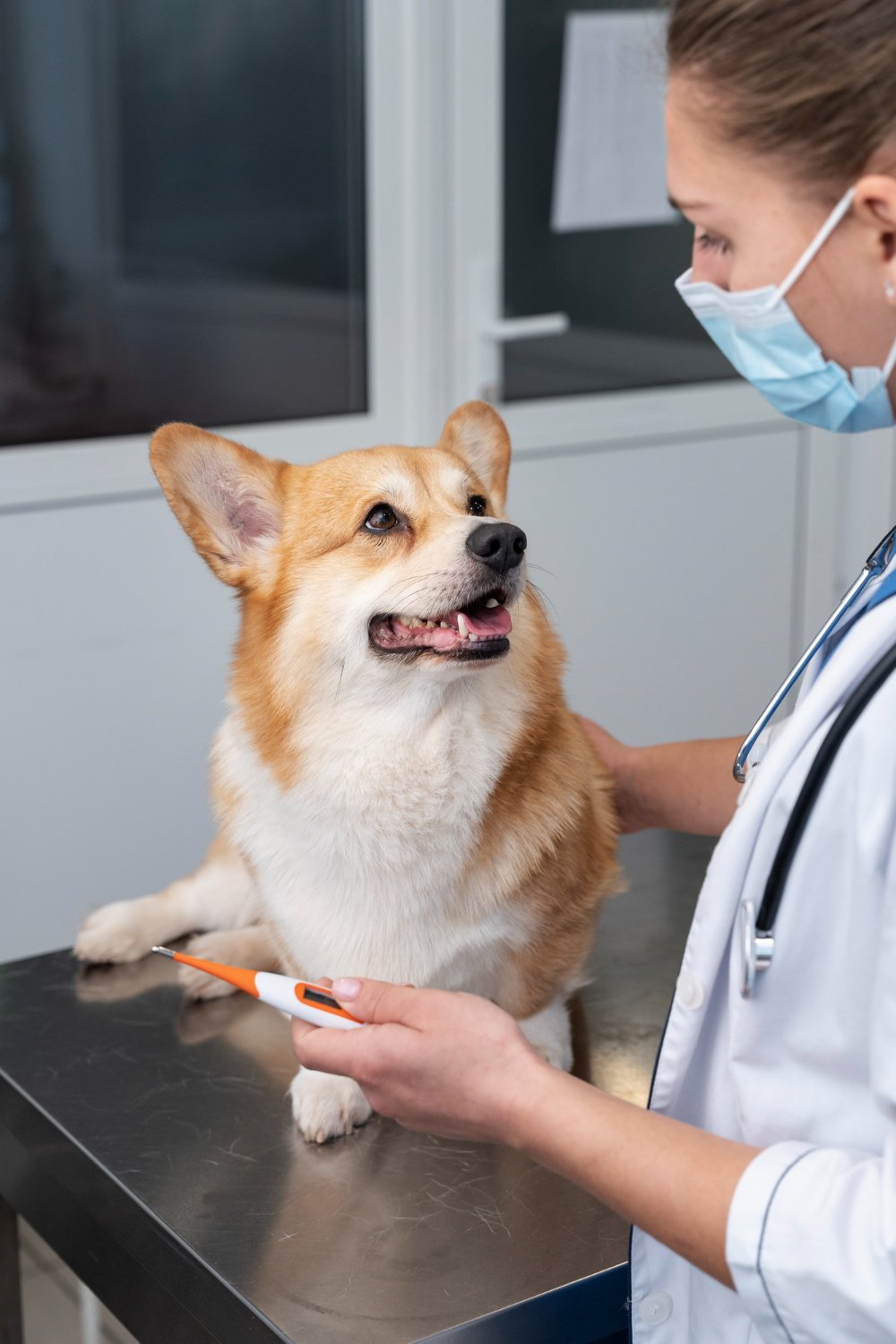
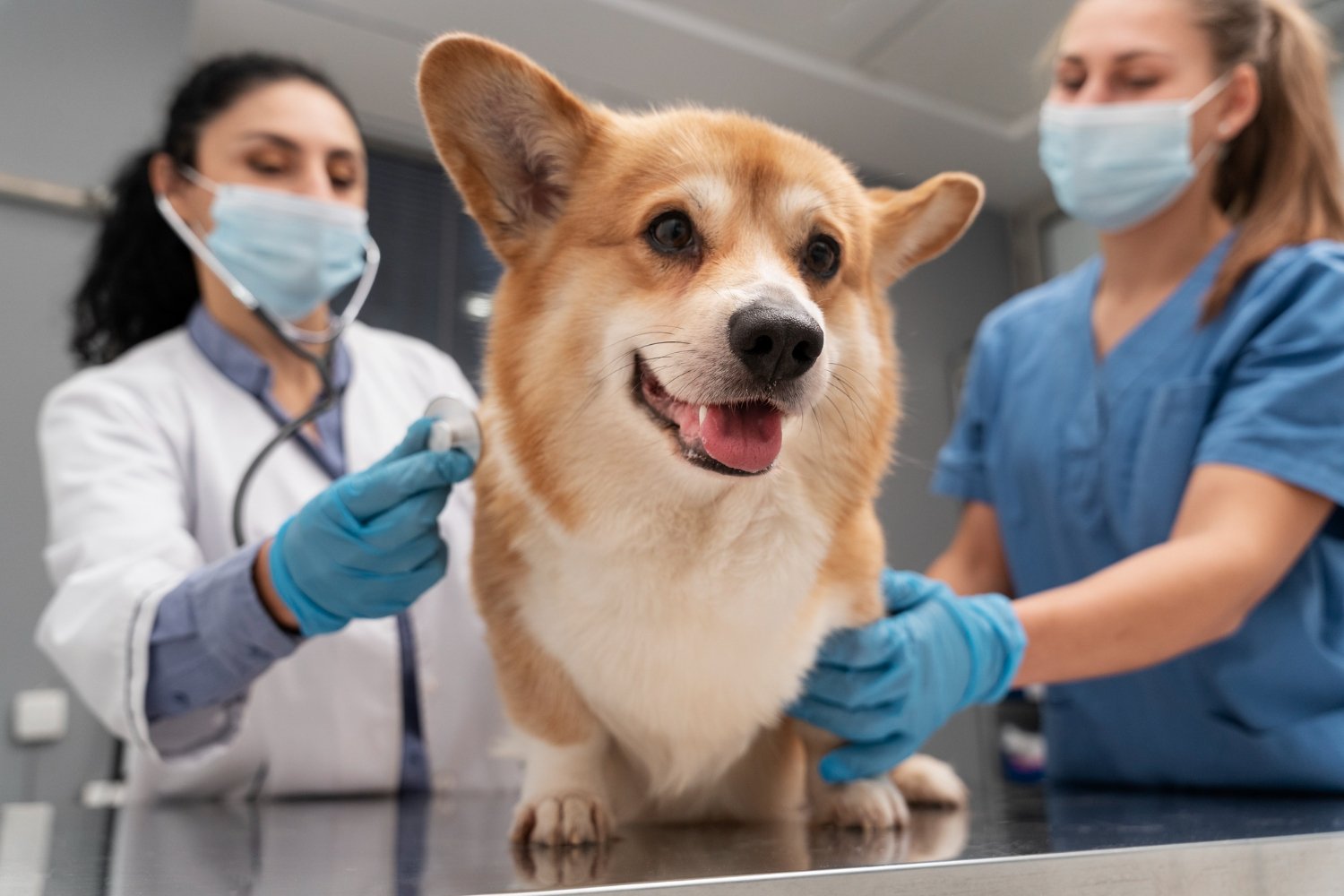
One of the most important things you can do for your dog's health is bring them in for a wellness exam even when they seem completely fine. Most serious diseases, cancer, kidney disease, heart disease, diabetes, develop silently. A wellness exam is how you find them before they become emergencies.
How Often
-
Puppies: Multiple visits in the first year (aligned with the vaccine schedule)
-
Adult dogs (1–7 years): Once per year minimum
-
Senior dogs (7+ years for large breeds; 10+ for small breeds): Twice per year, every 6 months. A dog ages roughly 5–7 human years for every calendar year; a lot can change in 6 months.
What Happens at a Wellness Exam
Your vet performs a head-to-tail physical examination. They check:
-
Eyes, ears, nose, and throat
-
Teeth and gums (dental disease affects 80–90% of dogs by age 3)
-
Lymph nodes, swollen nodes can indicate infection or cancer
-
Heart and lungs with a stethoscope (detects murmurs, arrhythmias, fluid)
-
Abdomen, palpating the organs to feel for enlargement, pain, or masses
-
Skin and coat condition
-
Weight and body condition scoring
-
Joint mobility and muscle mass
-
Neurological reflexes
What May Be Recommended
-
Bloodwork: Complete blood count and chemistry panel, evaluates organ function, blood cells, and screens for diabetes, kidney disease, liver disease, thyroid disease
-
Urinalysis: Evaluates kidney function, screens for UTIs and diabetes
-
Fecal exam: Checks for intestinal parasites, bring a fresh sample
-
Heartworm test: Annual recommendation regardless of prevention
-
Vaccines & boosters: As scheduled for age and lifestyle
-
Dental cleaning: If tartar buildup or gum disease is present
Pro Tip: Bring a written list to every vet visit. Note anything you've observed in the past year, even small things like changes in sleep, water intake, energy, or stool. A 5-second observation from you can be diagnostically significant. Use our free Monthly Wellness Guide regularly to keep track of any changes.